The sumac onion salad is the undisputed crown jewel of Middle Eastern table condiments, offering a sharp, tangy, and visually stunning contrast to rich meats and savory grains. Known in Turkish cuisine as Sogan Salatasi, this simple yet transformative side dish relies on the magic of acidity and the earthy punch of deep-burgundy sumac powder.
Imagine paper-thin, translucent ribbons of red onion that have been tamed of their bite, glowing with a vibrant magenta hue under soft natural light. Every strand is glistening with premium extra virgin olive oil and spiked with the citrusy brightness of fresh lemon juice, making it as much a feast for the eyes as it is for the palate.
Whether you are tucking these onions into a warm pita or serving them alongside a hearty roast, the textural crunch and “emerald-green” flecks of parsley create an unforgettable sensory experience. This recipe captures the exact hyper-realistic detail of a high-end bistro preparation, ensuring your onions are never soggy but always crisp and perfectly seasoned.
Why This Zesty Mediterranean Side Dish Is a Total Game Changer
- Visual Brilliance: The ruby red and vibrant magenta tones of the onions provide a high-contrast pop against any neutral plate.
- Perfect Texture: Achieved through “paper-thin” slicing, the onions offer a delicate crunch without the aggressive pungency of raw bulbs.
- The Sumac Punch: Coarse, gritty sumac powder provides an earthy, tart flavor profile that lemon juice alone cannot replicate.
- Culinary Versatility: It serves as the perfect acidic balance to everything from grilled lamb to a refreshing Mediterranean feta salad.
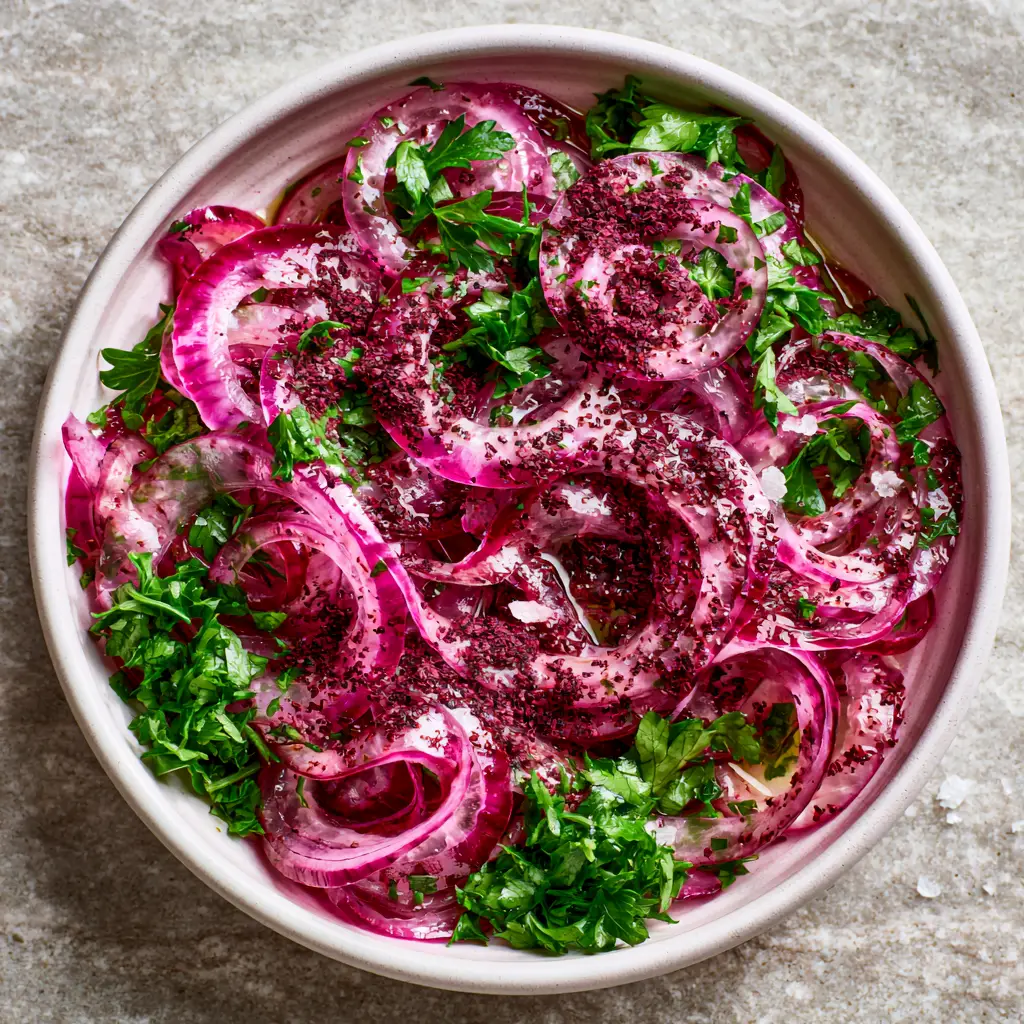
The Essential Elements for an Authentic Turkish Onion Salad
To achieve the professional results seen in our Visual Recipe Blueprint, each ingredient must be selected for its specific contribution to flavor and structural integrity.
Large Red Onions: Choose onions that are firm and heavy for their size; these will yield those beautiful ruby red, translucent slices when cut paper-thin. Red onions provide the necessary anthocyanins that turn a brilliant magenta when they hit the lemon juice.
Coarse Deep-Burgundy Sumac: This is the soul of the dish. Look for a coarse-grind sumac that feels slightly moist and has a dark wine color, rather than a dusty brown powder, to ensure that “gritty” and sharp flavor.
Fresh Flat-Leaf Parsley: Unlike curly parsley, the flat-leaf variety offers a clean, peppery bite and a bright emerald-green color that doesn’t wilt instantly. It provides the necessary herbal contrast to the heavy dusting of sumac.
Extra Virgin Olive Oil: Use a high-quality, cold-pressed oil to provide that characteristic “glistening” finish and a silky mouthfeel. It also helps the sumac grains adhere to the onion layers.
Fresh Lemon Juice: Always use freshly squeezed juice to provide the enzymatic reaction required to soften the onions’ cellular structure and brighten their color. Bottled juice simply lacks the aromatic oils found in fresh citrus.
Flaky Sea Salt: A few stray flakes of sea salt not only enhance the flavor but provide a delicate crystalline texture that mimics the macro-photography finish we are aiming for.
Tools Required for Paper-Thin Precision
Achieving the “hyper-realistic macro” look of these onions requires one specific tool: the Japanese mandoline slicer. While a sharp chef’s knife can work, a mandoline is the only way to ensure every single slice is consistently translucent and delicate.
You will also need a large bowl of ice water. Soaking the sliced red onions for 10 minutes is the “secret” culinary science step that removes the sulfurous “burn” while keeping the layers incredibly crisp and vibrant.
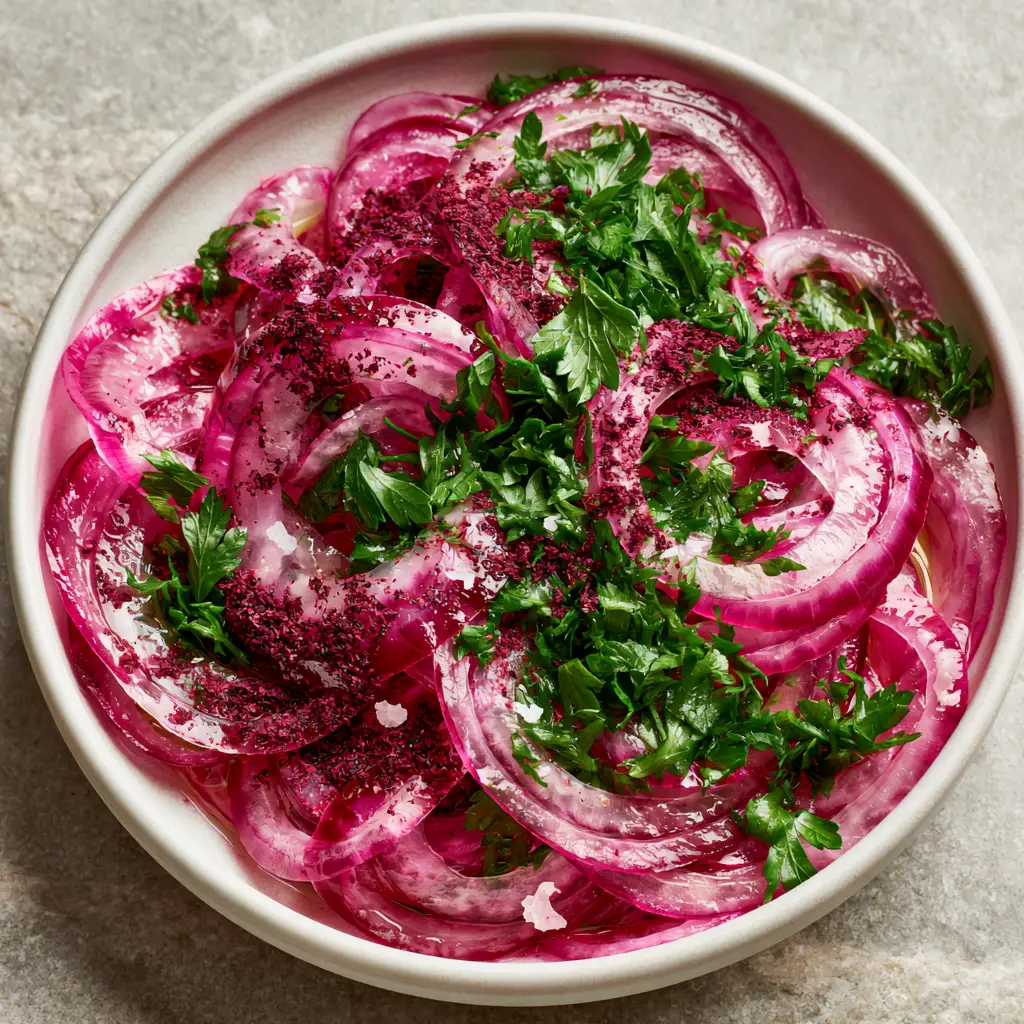
How to Make the Ultimate Sumac Onion Salad
Precision Slicing and the Cold Water Soak
Start by peeling your red onions and cutting them in half from pole to pole. Using a mandoline set to its thinnest setting, shave the onions into paper-thin, translucent half-moons. Immediately drop these slices into a bowl of ice-cold water.
Let them soak for 10 to 15 minutes; you will notice the water becomes slightly cloudy as the aggressive sulfur compounds leach out. This step ensures that even those who usually avoid raw onions will fall in love with this sumac onion salad.
Drying and Preparing the Herb Garnish
Drain the onions thoroughly and pat them bone-dry with a clean kitchen towel or a salad spinner. If the onions are wet, the olive oil will slide off, and you won’t get that “glistening” macro-shot finish.
Finely chop a generous amount of fresh flat-leaf parsley. You want small, bright emerald-green specks that will distribute evenly throughout the salad, rather than large clumpy leaves.
The Final Toss and Heavy Dusting
In a shallow white ceramic bowl, combine the dried onions and chopped parsley. Drizzle with the extra virgin olive oil and fresh lemon juice, tossing gently with your hands or a pair of tongs to coat every strand.
Finally, apply a heavy dusting of the coarse, gritty sumac powder. The deep-burgundy grains should be visible on the translucent magenta onion layers. Finish with a few stray flakes of sea salt just before serving to maintain their crunch.
Pro Tips for High-End Restaurant Results
- Don’t Over-Mix: Once the sumac is added, toss just enough to distribute. Over-mixing can cause the sumac to bleed and turn the salad a muddy brown rather than vibrant magenta.
- The “Bloom” Effect: Let the salad sit for 5 minutes after dressing. The lemon juice will “bloom” the color of the onions, making them look like glowing rubies.
- Temperature Control: Serve the salad slightly chilled or at room temperature. If it’s too warm, the parsley will lose its bright emerald-green luster.
- Quality of Sumac: If your sumac smells like nothing, it is too old. It should have a distinct, tart aroma similar to dried cranberries or lemon zest.
Storage and Make-Ahead Advice
This salad is best enjoyed within 2 to 3 hours of preparation to maintain the “paper-thin” crispness. However, leftovers can be stored in an airtight container in the refrigerator for up to 2 days.
Note that as it sits, the onions will continue to soften and release moisture, and the parsley will darken. If you are making this for a dinner party, slice and soak the onions ahead of time, but wait to add the oil, lemon, and sumac until right before the plates hit the table.
What to Serve With This Zesty Onion Salad
This sumac onion salad is the ultimate companion for grilled proteins. It cuts through the fat of a ribeye steak or balances the creaminess of a classic cucumber salad.
For a complete Mediterranean spread, serve it alongside a lemon arugula pasta salad or a smoky charred corn and black bean salad. It also makes a surprising and delightful topping for a refreshing summer peach salad when you want to add a savory, tart dimension.
Common Questions About Sumac Onions
While you can, red onions are preferred for their vibrant magenta color and slightly sweeter profile. White onions will stay white and won’t provide the same visual pop when mixed with sumac and lemon.
Always wash and dry your parsley thoroughly before chopping, and only toss it with the oil and lemon right before serving. Moisture on the leaves is the enemy of a fresh-looking salad.
No. While they are both acidic, these are fresh and crisp rather than soft and preserved. They rely on the unique earthy, citrus flavor of sumac rather than a vinegar brine.
You can use finely ground sumac, but you’ll lose that gritty texture. If your sumac is old and has lost its tartness, add a tiny bit of extra lemon zest to compensate for the missing acidity.
This usually happens if the onions aren’t sliced thin enough or if you skip the ice-water soak. Soaking the onions leaches out the sulfur compounds that cause that harsh raw ‘bite’.
The Best Sumac Onion Salad Recipe
Sumac Onion Salad: The Vibrant Turkish Condiment for Your Favorite Dishes
Ingredients
Equipment
Method
- Peel red onions and halve them pole to pole. Use a mandoline to create paper-thin slices. Submerge the slices in a bowl of ice water for 15 minutes until translucent and crisp.
- Drain the onions and pat them completely dry with a towel. Finely chop the parsley until you have bright emerald-green bits.
- Place onions and parsley in a shallow bowl. Drizzle with olive oil and lemon juice, tossing until every strand is glistening.
- Heavily dust with the burgundy sumac and sprinkle with flaky sea salt. Toss once more and serve immediately for maximum vibrancy.
Notes
Don't add the salt until the very last second to prevent the onions from weeping moisture.
Final Thoughts on This Vibrant Mediterranean Classic
Mastering the sumac onion salad is about respecting the ingredients and the technique of the slice. By using a mandoline and the ice-water soak, you transform a humble root vegetable into a glistening, ruby-red masterpiece that elevates any meal.
We would love to see how your salad turned out! Did you achieve that perfect magenta glow? Leave a comment below and don’t forget to share your beautiful creations to Pinterest so others can find this zesty recipe.