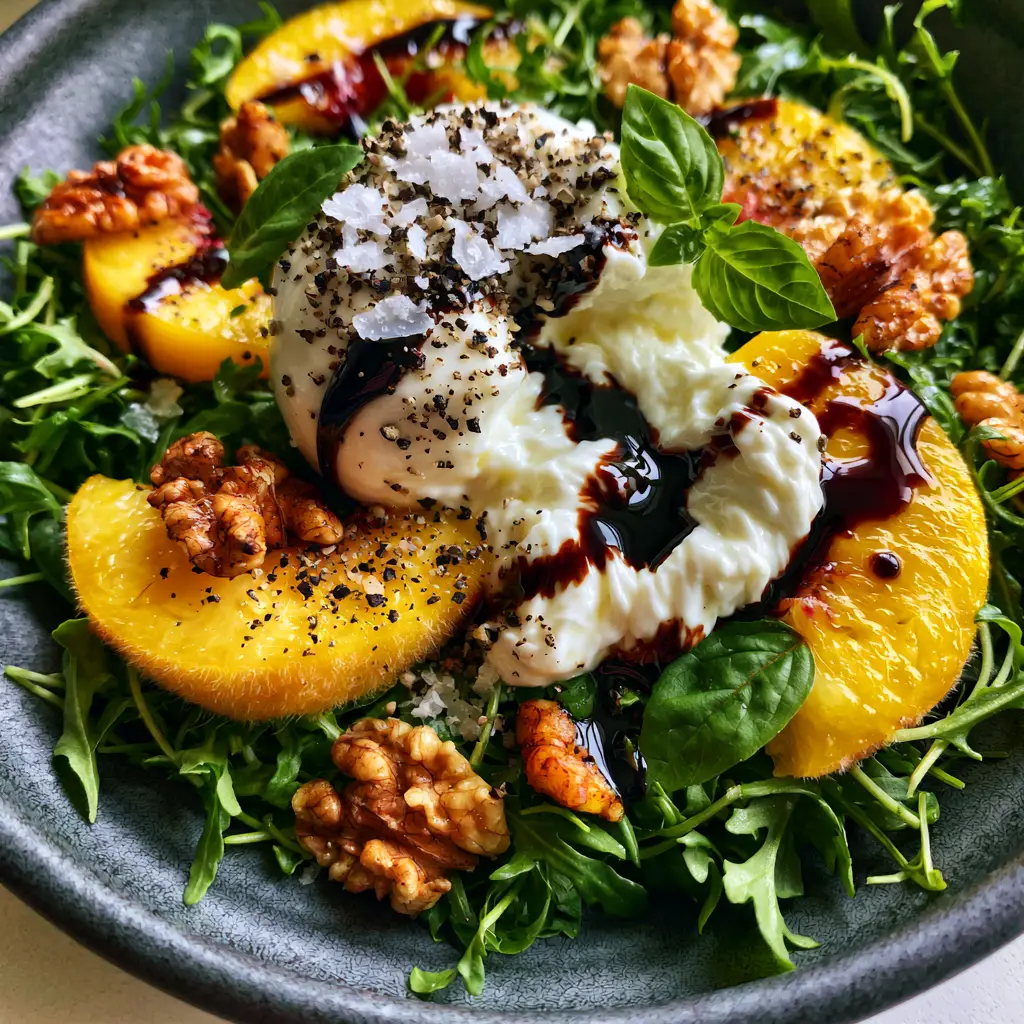
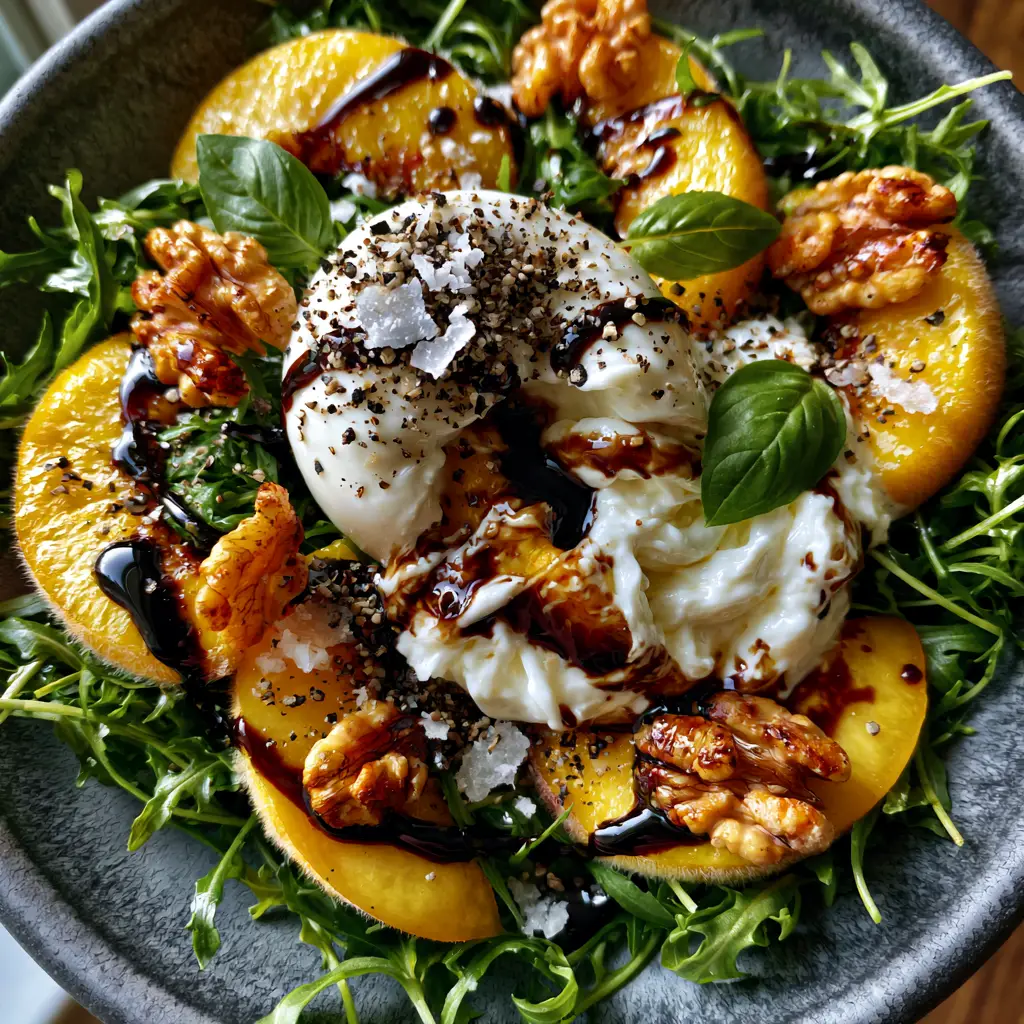
The summer peach salad is the definitive anthem of peak-season produce, capturing the fleeting magic of sun-drenched afternoons in a single charcoal-grey ceramic bowl. This dish isn’t just a side; it is a visual and sensory masterpiece that balances the fuzzy sweetness of golden peaches with the rich, luxurious spill of torn burrata cheese.
When the heat of July and August hits, your kitchen needs a recipe that requires minimal heat but delivers maximum elegance. This specific preparation focuses on high-contrast textures—the crunch of toasted walnuts against the silkiness of cream-filled cheese, all tied together by a syrupy, obsidian-colored balsamic drizzle.
Whether you are hosting an alfresco dinner party or looking for a sophisticated lunch, this summer peach salad provides a professional-grade culinary experience. By following this guide, you will learn the forensic details of ingredient selection and assembly that transform simple fruit and greens into a work of art.
Why This Vibrant Summer Medley Works Every Time
- Texture Contrast: The recipe features a “Forensic Visual Bridge” between the crisp, peppery baby arugula and the soft, juicy yellow peach slices that still retain their characteristic fuzzy skin.
- The Burrata Effect: Unlike standard mozzarella, the torn burrata spills its rich stracciatella interior, creating a built-in creamy dressing that coats the greens and fruit.
- Visual Sophistication: The dark obsidian balsamic glaze creates deep shadows and highlights against the snowy white cheese and emerald basil, making it a dream for food photography.
- Balanced Flavor Profile: You get hits of sweetness, acidity, bitterness from the greens, and a finish of flaky Maldon sea salt that makes every other flavor pop.
The Essential Components for the Ultimate Summer Peach Salad
Fresh Yellow Peaches: You need 2 large (approx. 300g) peaches that are fragrant and slightly soft to the touch. Yellow peaches provide the necessary acidity to cut through the heavy cream of the burrata, whereas white peaches can be too one-dimensionally sweet.
Creamy Burrata Cheese: One large 8oz (225g) ball of fresh burrata is the centerpiece. Ensure it is at room temperature before serving so the stracciatella (the creamy center) flows easily across the salad.
Baby Arugula: Use 4 cups (about 120g) of vibrant, dark green baby arugula. Its peppery bite is the essential counterpoint to the sugary peaches and the reduction, preventing the dish from tasting like a dessert.
Balsamic Glaze: A thick, syrupy reduction is mandatory. You can use 1/2 cup (120ml) of high-quality store-bought glaze or reduce your own until it reaches an obsidian-dark, coat-the-back-of-a-spoon consistency.
Toasted Walnut Halves: 1/2 cup (50g) of walnuts provides the necessary structural crunch. Toasting them is not optional; it releases essential oils that provide a deep, earthy aroma that complements the fresh basil.
Fresh Basil Leaves: 1/4 cup (approx. 5g) of small, emerald-green leaves. Basil adds a floral, anise-like top note that bridges the gap between the fruit and the savory cheese.
Extra Virgin Olive Oil: 2 tbsp (30ml) of the highest quality oil you own. This acts as a “foundational invisible ingredient” to emulsify with the balsamic and carry the flavors of the cracked pepper.
Seasoning: Use 1 tsp (approx. 5g) of flaky sea salt (like Maldon) and 1/2 tsp (1g) of freshly cracked black pepper. The coarse texture of the pepper is vital for the visual “macro” finish described in our professional blueprint.
Tools for Professional Presentation
To achieve the “top-down macro” look, you don’t need a professional studio, but you do need the right vessels. A shallow, handcrafted matte charcoal-grey ceramic bowl is preferred, as the dark background makes the golden peaches and white burrata visually vibrate.
A high-quality chef’s knife or a mandoline is essential for achieving those consistent, thick slices of peach. You will also need a small non-stick skillet for toasting the walnuts to a perfect golden brown without scorching the delicate nut oils.
A Step-by-Step Guide to Crafting the Perfect Salad
Preparing the Golden Peach Slices
Begin by washing your yellow peaches gently to preserve the soft fuzzy skin, which adds an authentic, rustic texture to the final dish. Cut the peach in half, remove the pit, and slice into thick, uniform wedges about 1/2 inch (1.25cm) thick.
If your peaches are exceptionally juicy, pat the cut sides gently with a paper towel. This ensures the balsamic glaze clings to the fruit rather than sliding off into a puddle of juice at the bottom of your charcoal bowl.
Toasting Walnuts for Maximum Crunch
Place your walnut halves in a dry skillet over medium heat. Shake the pan frequently for 3-5 minutes until you smell a rich, toasted aroma and the surfaces turn a deep golden brown.
Immediately remove the walnuts from the hot pan and place them on a cool plate. Leaving them in the hot skillet, even with the heat off, will lead to over-browning and a bitter aftertaste that ruins the delicate balance of the summer peach salad.
Building the Arugula Base
Toss the baby arugula in a separate bowl with 1 tbsp (15ml) of olive oil and a tiny pinch of salt. This pre-seasoning step ensures the greens are flavorful even before they meet the other components.
Arrange the arugula in your shallow ceramic bowl, creating a lush, dark green bed. Leave some space around the edges to showcase the texture of the handcrafted ceramic.
Tearing the Burrata and Final Assembly
Place the whole burrata ball directly in the center of the arugula. Using two forks or your fingers, gently tear the outer mozzarella skin open, allowing the rich, snowy white stracciatella to spill out over the center of the salad.
Nestle the peach slices around the burrata, tucking some under the leaves and letting others sit proudly on top. Scatter the toasted walnuts and small basil leaves across the dish with intentional randomness for a “smartphone-photo” authentic look.
The Obsidian Drizzle and Seasoning
Take your thick balsamic glaze and drizzle it in a zig-zag motion over the entire bowl. Aim for the crevices of the torn cheese and the curves of the peaches, allowing the obsidian liquid to pool slightly.
Finish with a heavy pinch of flaky sea salt and a generous dusting of coarse cracked black pepper. The large salt flakes should be visible to the eye, catching the diffused natural afternoon sunlight for that perfect hyper-realistic finish.
Professional Secrets for Salad Success
- Temperature Control: Never serve burrata cold. Take it out of the refrigerator at least 30 minutes prior to assembly so the interior reaches its peak creaminess.
- The Ripeness Test: For this summer peach salad, you want “firm-ripe” peaches. If they are mushy, they won’t hold their shape; if they are too hard, they lack the sweetness to compete with the balsamic.
- Basil Handling: Never chop the basil with a knife if the leaves are small. Tearing them by hand prevents bruising and keeps the emerald-green color vibrant.
- Glaze Consistency: if your balsamic glaze is too thin, it will dye the whole salad purple. It should have the viscosity of warm honey to stay exactly where you drizzle it.
Maintaining Freshness: Storage and Prep Ahead
The summer peach salad is best enjoyed immediately after assembly. Because burrata has a high moisture content and peaches begin to oxidize once sliced, this is not a dish that fares well in the refrigerator overnight.
However, you can prepare components in advance. Toast the walnuts and store them in an airtight container for up to 3 days. The balsamic glaze can be made weeks in advance. If you must prep the peaches, toss them in a teaspoon of lemon juice to prevent browning, though this may slightly alter the flavor profile.
Perfect Pairings for Your Seasonal Spread
This salad is a versatile powerhouse that fits perfectly into any collection of summer dinner ideas. Its richness makes it a great starter for a light summer pasta salad or a companion to various summer grilling recipes.
If you are hosting a larger gathering, consider serving this alongside a crisp cucumber salad or a zesty lemon arugula pasta salad to provide a variety of textures and flavors on the table. The peppery notes of the arugula also pair beautifully with savory dishes like a deconstructed blt pasta salad.
Common Culinary Questions
While you can, white peaches are much sweeter and less acidic than yellow peaches. Yellow peaches provide a better balance to the rich, creamy burrata and sweet balsamic glaze.
Simmer balsamic vinegar with a touch of honey or sugar in a small saucepan over low heat until it reduces by half and coats the back of a spoon with an obsidian-like sheen.
Assemble no more than 15-20 minutes before serving. The arugula will wilt and the burrata will release moisture if left to sit for too long.
No, for this recipe, the fuzzy skin of the yellow peach is essential for the rustic, authentic look and provides a pleasant textural contrast to the smooth cheese.
Fresh buffalo mozzarella is the closest substitute. However, it won’t have the same creamy, spilling stracciatella center that characterizes this specific summer peach salad.
The Definitive Summer Peach Salad Recipe
Summer Peach Salad with Creamy Burrata and Balsamic Glaze
Ingredients
Equipment
Method
- Place walnut halves in a dry skillet over medium heat. Toast for 3-5 minutes, shaking frequently, until fragrant and golden brown. Remove immediately from heat.
- Wash the yellow peaches. Slice them into 1/2-inch thick wedges, keeping the fuzzy skin intact for texture and visual appeal.
- Lightly toss baby arugula with 1 tbsp of olive oil and a pinch of salt. Arrange in a shallow matte charcoal bowl.
- Place the burrata in the center and tear it open with your fingers. Arrange peach slices and toasted walnuts around the creamy cheese.
- Drizzle with thick balsamic glaze. Scatter fresh basil leaves over the top. Finish with a heavy pinch of flaky sea salt and coarse cracked black pepper.
Notes
Choose peaches that are fragrant but still firm enough to slice without collapsing.
Final Thoughts and Sharing
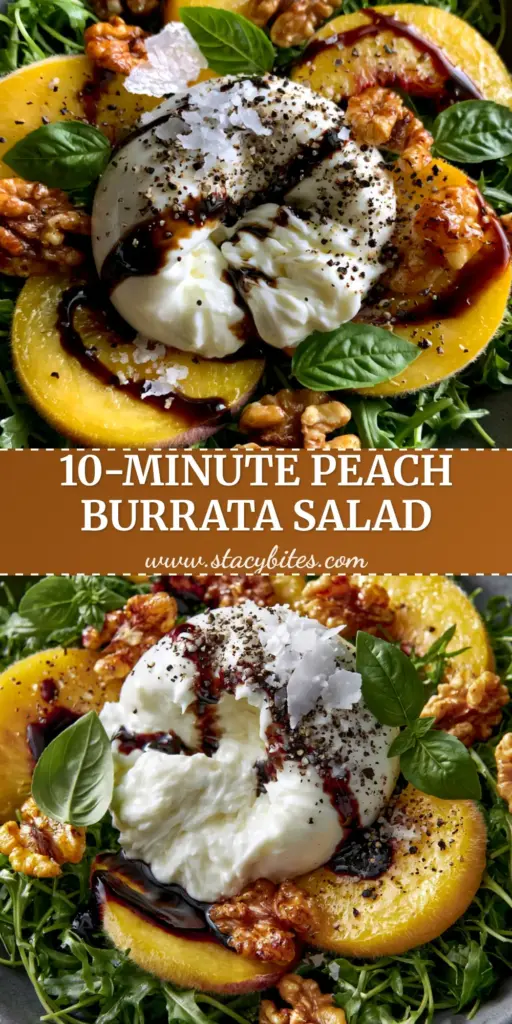
Creating a professional-grade summer peach salad is about honoring the ingredients and understanding the visual cues that signify freshness. The contrast of the charcoal bowl against the golden fruit and obsidian glaze creates a dining experience that is as beautiful as it is delicious.
If you enjoyed this recipe, I would love to hear your thoughts in the comments below! Don’t forget to follow me on Pinterest and share your own salad creations. Tagging your photos helps other home cooks find inspiration for their next seasonal meal.