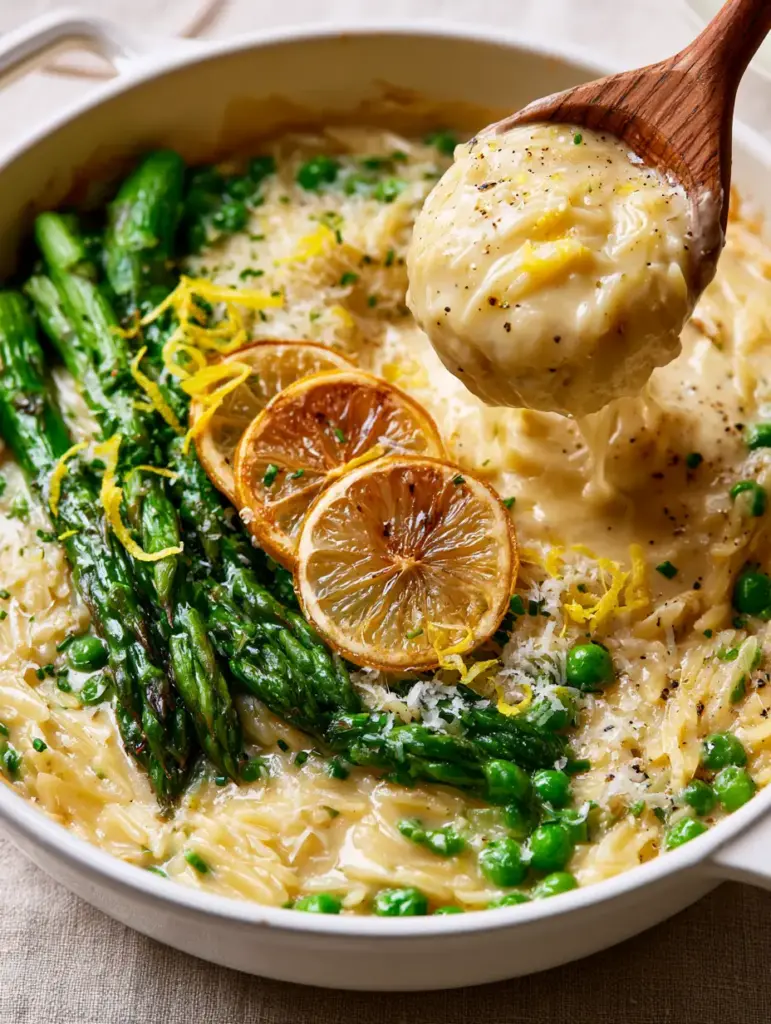
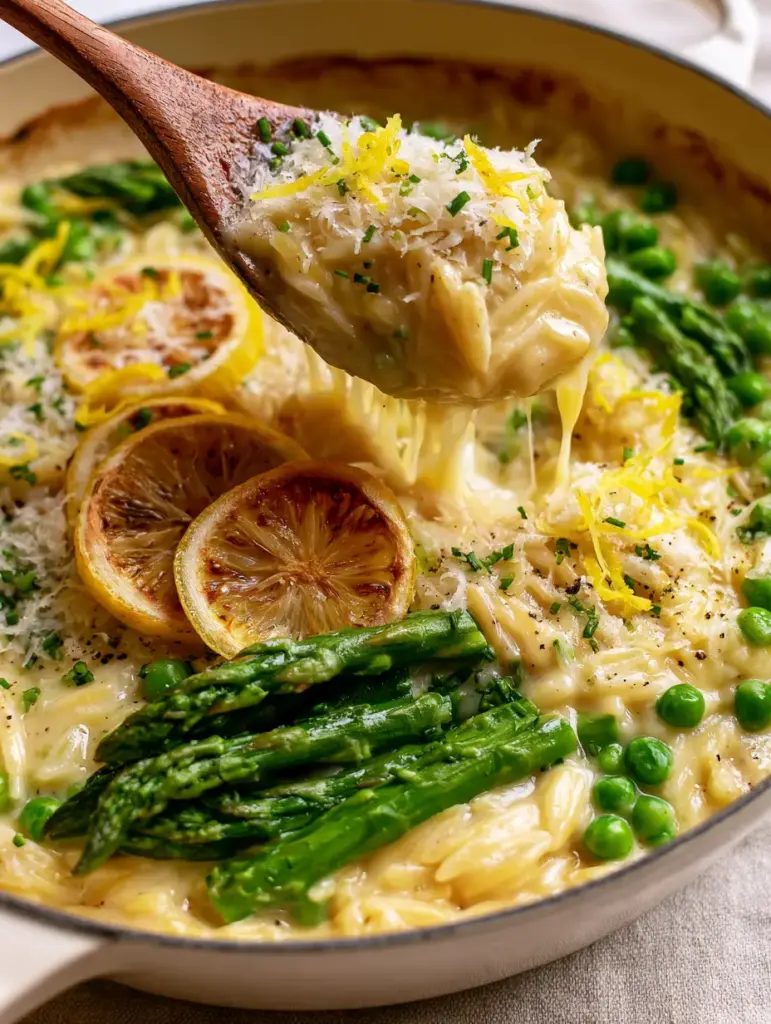
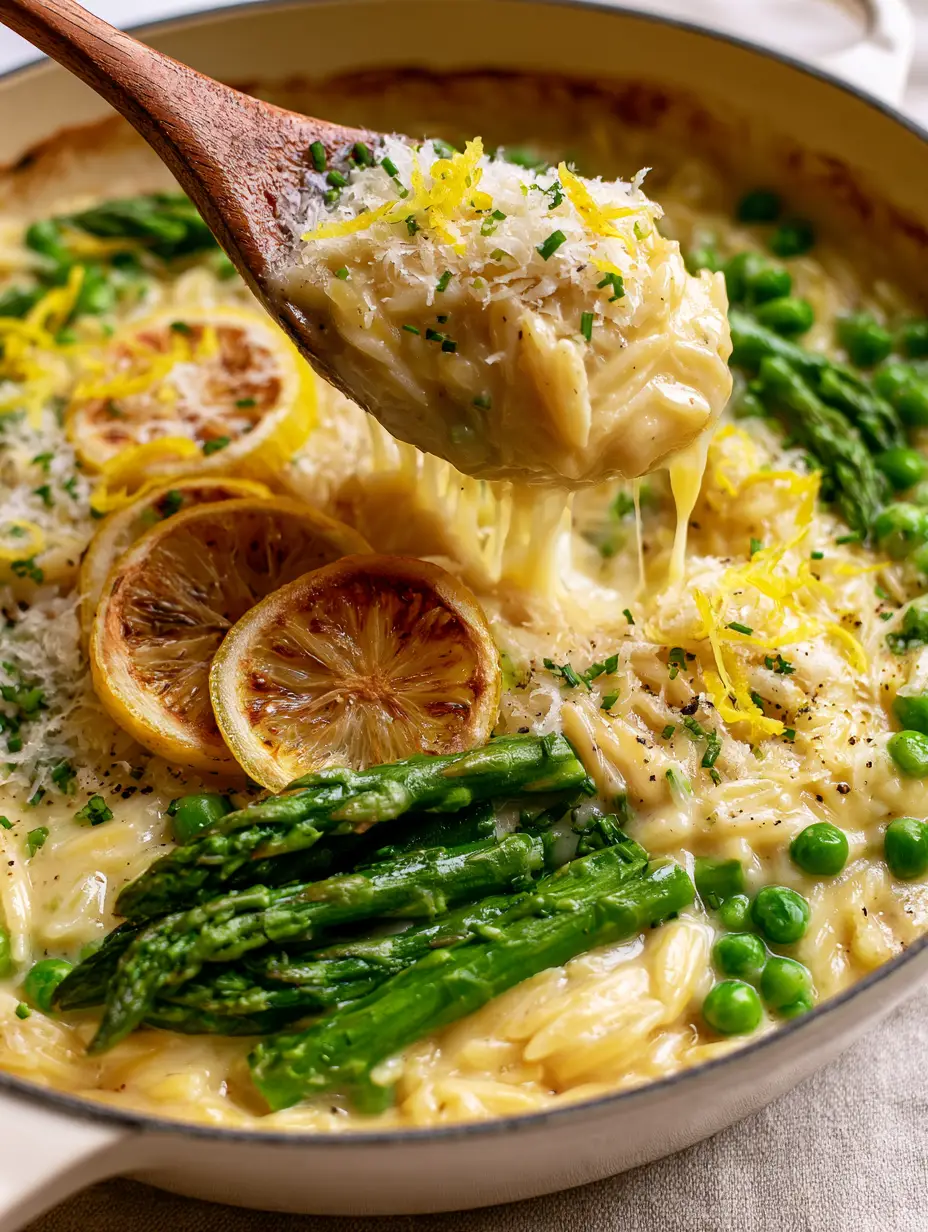
There is a specific moment in late spring when the kitchen calls for something that feels both indulgent and incredibly fresh. This Asparagus Peas Orzo is the culinary embodiment of that transition. Imagine a shallow white ceramic Dutch oven filled to the brim with al dente orzo pasta, every grain enrobed in a glossy, silky parmesan cream sauce that glistens under natural window light.
As you lift a generous, dripping scoop with a wooden spoon, you see the vibrant, bright green blanched asparagus tips and plump, glistening sweet peas peeking through the cream. The dish is finished with a heavy dusting of micro-planed parmesan cheese that looks like fresh snow, contrasted by the charred, caramelized edges of thin lemon slices. This isn’t just a meal; it’s a sensory experience designed to capture the essence of garden-fresh ingredients and professional technique.
Why This Vibrant Spring Orzo Recipe Works
- The Texture Hierarchy: By utilizing the “blanch and shock” method, we ensure the asparagus tips maintain their visible scales and snap, preventing the mushiness often found in one-pot pasta dishes.
- Visual Contrast: The bright yellow lemon zest curls and finely minced chives provide a pop of color against the neutral, creamy backdrop of the sauce.
- Flavor Depth: We don’t just add lemon juice; we sear thin lemon wheels until caramelized, adding a sophisticated smoky citrus note that balances the rich parmesan.
- Silky Emulsion: Using a combination of high-quality vegetable stock and heavy cream creates a sauce that is “dripping” and glossy rather than clumpy or dry.
- Garnish Precision: The use of a micro-plane for the cheese ensures a “snow-like” texture that melts instantly upon contact with the palate.
Essential Components for the Perfect Asparagus Peas Orzo
To achieve the specific visual and flavor profile of this Asparagus Peas Orzo, each ingredient must be selected and prepared with intention. We are looking for high-contrast colors and professional-grade textures.
Dried Orzo Pasta: 1.5 cups (300g). This rice-shaped pasta is the canvas for our sauce; look for a high-quality durum wheat brand that holds its “al dente” shape during simmering.
Fresh Asparagus Tips: 1 lb (450g). We are specifically using the top 2-3 inches of the spears to ensure every bite contains the iconic “visible scales” described in our visual blueprint.
Sweet Green Peas: 1 cup (150g). Whether fresh or frozen, these provide the “plump, glistening” spheres of sweetness that break up the richness of the cream sauce.
Heavy Cream: 1/2 cup (120ml). This is the foundation of our “silky parmesan cream sauce,” providing the necessary fat content for a glossy, professional finish.
Parmesan Cheese: 1 cup (90g), freshly grated. You will need a block of Parmigiano Reggiano to achieve that “micro-planed snow” effect for the final garnish and the salty base of the sauce.
Lemons: 2 large. One will be sliced into thin wheels for charring, while the other provides the bright yellow zest curls and fresh juice for the sauce.
Vegetable Broth: 3 cups (720ml). A high-quality, low-sodium broth allows the flavor of the vegetables to shine without over-salting the pasta.
Invisible Foundations: You will also need 2 tbsp (30g) of unsalted butter for searing the lemons, 1 tbsp (15ml) of extra virgin olive oil for toasting the orzo, and 1 tsp (5g) of cracked black pepper to create those “visible flecks” in the sauce.
Professional Tools for Culinary Success
To replicate the macro, top-down angled photo look, your equipment matters as much as your ingredients. A shallow white ceramic Dutch oven is preferred for even heat distribution and a beautiful presentation against a neutral linen background.
You will also need a micro-plane grater to create the fine cheese “snow” and the delicate lemon zest curls. A sharp mandoline is highly recommended for achieving the “thin lemon slices” that caramelize evenly without falling apart. Finally, a sturdy wooden spoon is essential for that “generous, dripping scoop” visual that defines the heart of this dish.
The Step-by-Step Guide to Creamy Lemon Perfection
1. Preparing the Vibrant Green Base
Bring a small pot of salted water to a boil. Prepare an ice bath nearby. Drop your asparagus tips and peas into the boiling water for exactly 2 minutes until they are “bright green.”
Immediately plunge them into the ice water. This “shocks” the vegetables, locking in the chlorophyll so they remain vibrant and glistening even after being folded into the warm Asparagus Peas Orzo later.
2. Searing the Caramelized Lemon Wheels
In your shallow Dutch oven, melt 1 tbsp (15g) of butter over medium-high heat. Lay three to four very thin lemon slices in the pan. Do not move them for 2 minutes.
Look for the edges to turn a deep golden brown. Flip once, sear for 30 seconds, and remove. These “charred thin lemon slices” will be our centerpiece garnish, offering a concentrated citrus punch.
3. Toasting the Orzo and Building the Sauce
In the same pan, add the remaining butter and olive oil. Add the dry orzo and toast for 2-3 minutes. You are looking for a nutty aroma and a slight golden hue on some of the grains.
Slowly pour in the vegetable broth and bring to a gentle simmer. Stir frequently; the friction of the orzo grains releases starches, which is the first step toward that “silky” texture we desire.
4. The Glossy Parmesan Finish
Once the orzo is al dente and most of the liquid is absorbed, stir in the heavy cream and cracked black pepper. The sauce should appear glossy and have visible flecks of pepper throughout.
Lower the heat and fold in 3/4 cup (70g) of the micro-planed parmesan. Stir until the cheese is completely emulsified into a “silky parmesan cream sauce.” If the sauce looks too thick, add a splash more broth until it reaches a “dripping” consistency.
5. Final Assembly and Visual Garnishing
Gently fold in your blanched asparagus tips and peas. They should be “tucked into the pasta,” peeking out from the creamy folds. Squeeze in the juice of half a lemon and stir once more.
Place your charred lemon wheels on top. Just before serving, use your micro-plane to create a “heavy dusting” of parmesan over the entire surface. Finish with finely minced chives and bright yellow lemon zest curls for the ultimate professional look.
Expert Tips for a Picture-Perfect Result
- Don’t Overcook the Orzo: The pasta will continue to cook slightly as you stir in the cream. Stop simmering when there is still a tiny bit of “bite” (al dente) to the grain.
- Starch is Your Friend: Like making a risotto, the frequent stirring of the orzo is what creates the “silky” nature of the sauce. Don’t just let it sit.
- Freshness Matters: Only use freshly cracked black pepper. The pre-ground variety won’t give you those beautiful, large “visible flecks” seen in the macro photo.
- Temperature Control: Ensure your cream is at room temperature before adding it to the Dutch oven to prevent the sauce from breaking or curdling.
Managing Leftovers and Reheating
This Asparagus Peas Orzo is best served immediately to maintain the “glossy” sauce texture. However, leftovers can be stored in an airtight container in the refrigerator for up to 3 days.
When reheating, the orzo will have absorbed much of the sauce. To restore the “dripping scoop” consistency, add a tablespoon of broth or milk per serving before microwaving or heating on the stovetop. We do not recommend freezing this dish, as the cream sauce may separate and the asparagus will lose its crisp texture.
Incredible Pairings for Your Spring Feast
While this dish is a powerhouse on its own, it pairs beautifully with other seasonal favorites. For a light lunch, serve it alongside a vibrant sunflower crunch salad for added texture.
If you are hosting a larger dinner party, consider starting with a refreshing cucumber punch or a bright raspberry mojito to complement the lemon notes of the pasta. If you love orzo as much as we do, you might also enjoy our classic greek orzo pasta salad for your next meal prep session!
Commonly Asked Questions about Orzo Pasta
Yes! Frozen peas work perfectly. Simply blanch them for 1 minute instead of 2 to ensure they stay plump and don’t become mushy.
To prevent curdling, ensure your heavy cream is at room temperature and lower the heat of the orzo before stirring it in. Avoid boiling the sauce once the cream and cheese are added.
Orzo is a thin, oval, rice-shaped pasta made from durum wheat semolina. While it looks like grain, it should be treated and cooked like pasta.
Tender broccolini florets or snap peas are excellent substitutes that provide a similar crunch and vibrant green color.
Orzo is very starchy. To prevent sticking, ensure you use enough liquid and stir frequently, especially during the first few minutes of simmering.
The Ultimate Asparagus Peas Orzo Recipe
Asparagus Peas Orzo with Silky Lemon Parmesan Cream Sauce
Ingredients
Equipment
Method
- Blanch asparagus tips and peas in boiling salted water for 2 minutes, then immediately shock in an ice bath.
- Sear thin lemon slices in butter in a Dutch oven until caramelized and charred on the edges.
- Sauté orzo in the same pot with olive oil until fragrant and slightly golden.
- Add vegetable broth and simmer, stirring frequently, until orzo is al dente.
- Stir in heavy cream, cracked pepper, and parmesan cheese until a silky, glossy sauce forms.
- Fold in vegetables and top with charred lemons, lemon zest curls, chives, and extra parmesan snow.
Notes
Stir the orzo frequently to release starches for a silkier sauce.

Closing & Call to Action
Crafting this Asparagus Peas Orzo is an exercise in culinary balance—pairing the richness of a silky parmesan cream with the bright, snappy notes of spring vegetables. Whether you are cooking for a special occasion or a refined weeknight dinner, this recipe delivers professional results with every scoop.
Did you capture a photo of your creamy orzo? I’d love to see it! Leave a comment below or tag me on social media. For more visual recipe inspiration, be sure to follow my boards on Pinterest and sign up for our newsletter to get seasonal recipes delivered straight to your inbox.