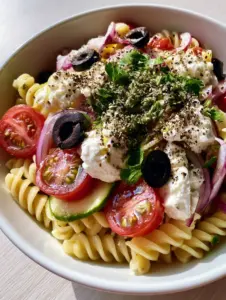
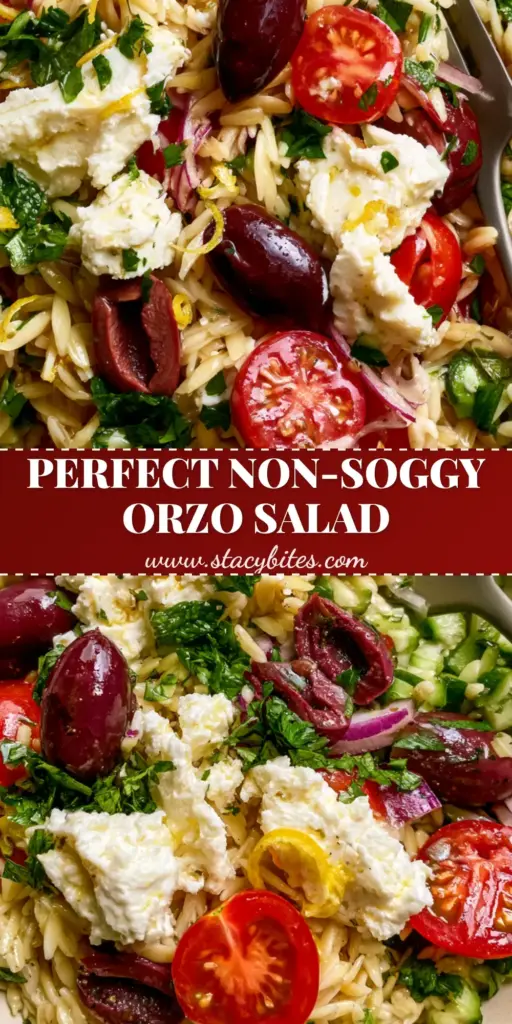
There is a specific visual magic that happens when Mediterranean ingredients collide in a single bowl. This Greek Orzo Pasta Salad is not just a side dish; it is a masterclass in texture and color. Imagine individual grains of orzo pasta, each one shimmering under a light coating of citrus-infused oil, punctuated by the deep purple of glossy Kalamata olives.
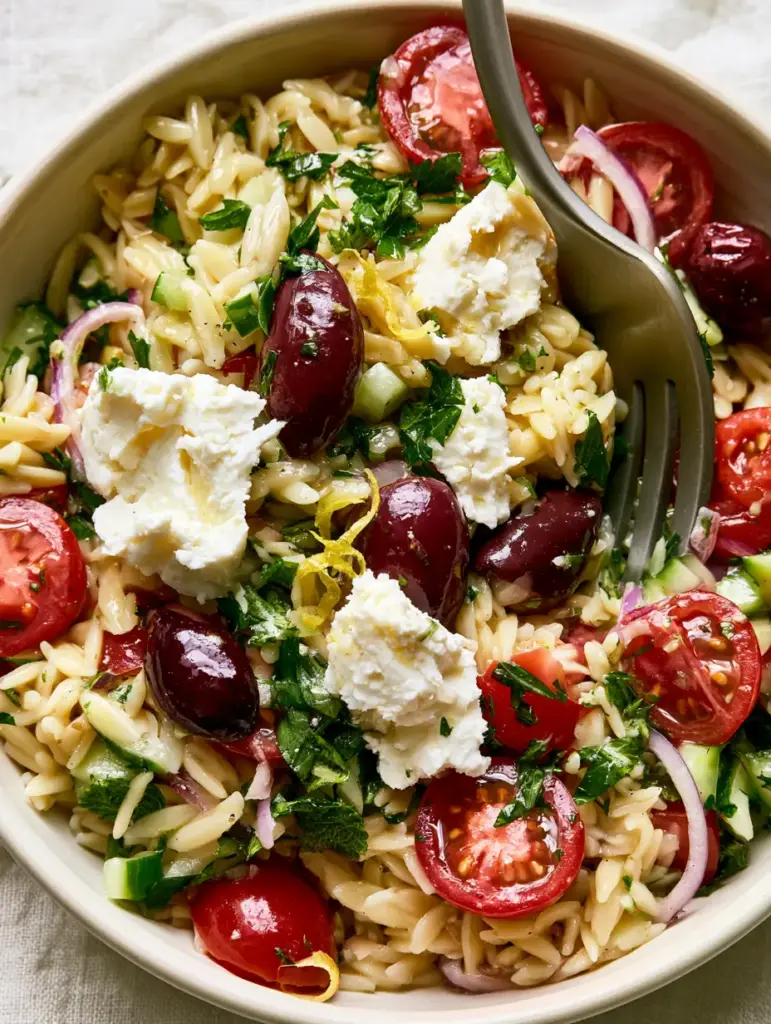
When you prepare this Greek Orzo Pasta Salad, you are creating a culinary landscape. We are looking for jagged, hand-crumbled feta that catches the dressing in its nooks and crannies. We want the sharp snap of Persian cucumbers and the gentle, aromatic lift of fresh mint and parsley.
Whether you are hosting a bright summer gathering or looking for a reliable meal-prep lunch, this recipe delivers professional results. It relies on foundational culinary techniques to ensure the pasta remains firm and the vegetables stay vibrant. Let’s dive into the anatomy of the perfect Mediterranean pasta bowl.
The Aesthetic & Flavor Blueprint: Why This Recipe Works
- Al Dente Precision: We use a specific boiling and cooling method to ensure every grain of orzo remains distinct and “non-clumping.”
- Jagged Texture Profile: By hand-crumbling the feta rather than using pre-cubed varieties, we create more surface area for the vinaigrette to cling to.
- The Shimmer Factor: Our emulsion technique for the lemon vinaigrette creates a glossy, translucent finish that makes the salad look like a professional food photograph.
- High-Contrast Color Palette: The bright red of quartered cherry tomatoes against the deep purple olives and vibrant green herbs provides incredible visual depth.
The Visual Anatomy: Ingredients for the Perfect Greek Orzo Pasta Salad
1 lb (450g) Orzo Pasta: This rice-shaped pasta is the canvas for our salad. Its small size allows it to mingle perfectly with the finely diced vegetables for a consistent bite.
1 cup (150g) Feta Cheese: Opt for a high-quality block of feta in brine. Breaking it into jagged crumbles by hand provides a much creamier texture than the dry, pre-crumbled alternatives.
1 cup (150g) Kalamata Olives: These should be halved and glossy. They provide the essential salty, umami punch that defines Mediterranean cuisine.
2 cups (300g) Cherry Tomatoes: Quarter these to reveal the juicy seeds and bright red interior. Their acidity balances the richness of the cheese and olives.
2 medium (200g) Persian Cucumbers: Leave the skin on for a bright green ring and maximum crunch. Dicing them finely ensures they integrate well with the orzo grains.
1/2 small (50g) Red Onion: Slice these into paper-thin half-moons. This technique tames their bite while adding a beautiful magenta hue to the bowl.
1/2 cup (15g) Fresh Flat-Leaf Parsley: This herb adds a clean, peppery finish. Chop it finely so it distributes evenly across the shimmering pasta grains.
1/4 cup (10g) Fresh Mint: Mint provides a surprising cooling element. It works in harmony with the lemon to make the Greek Orzo Pasta Salad taste incredibly fresh.
2 large Lemons (Zest and Juice): We use the juice for the acid in the dressing and the lemon zest curls for a bright, aromatic garnish that pops visually.
1/2 cup (120ml) Extra Virgin Olive Oil: Use the best quality oil you have. It is the primary “invisible” ingredient that creates the shimmering, non-clumping texture.
1 tbsp (15g) Honey or Agave: A small amount of sweetener balances the sharp lemon juice and helps stabilize the emulsion of the vinaigrette.
2 cloves Garlic, minced: Garlic provides the foundational aromatic base for the dressing, adding depth to the bright citrus notes.
Essential Kitchen Gear for a Professional Finish
To achieve the “macro-shot” quality of this Greek Orzo Pasta Salad, you need a few specific tools. A heavy, ceramic artisan bowl is ideal for serving, as its thermal mass keeps the salad cool.
A high-quality microplane or channel knife is necessary to create those delicate lemon zest curls. For the dressing, a small glass jar with a tight-fitting lid is superior to a whisk for creating a perfectly emulsified, shimmering vinaigrette.
Finally, a matte silver fork is the professional’s choice for tossing. Unlike wood, the metal doesn’t absorb the dressing, ensuring every drop stays on the pasta where it belongs.
Mastering the Orzo: Step-by-Step Culinary Guide
1. Achieving the Perfect Al Dente Orzo
Bring a large pot of heavily salted water to a rolling boil. Add the 1 lb (450g) of orzo and cook for exactly 1 minute less than the package instructions suggest.
Taste a grain at the 7-minute mark; it should be firm to the tooth with no floury center. Drain immediately and rinse with cold water for 30 seconds to stop the cooking process and remove excess starch.
2. The Emulsification of the Shimmering Vinaigrette
In a jar, combine the 1/2 cup (120ml) olive oil, the juice of 2 lemons, minced garlic, honey, and a generous pinch of salt and black pepper. Shake vigorously until the mixture is opaque and slightly thickened.
This emulsification is key. If the oil and lemon juice are separated, the salad will look greasy rather than glistening. The honey acts as a natural stabilizer for this mixture.
3. Preparing the Mediterranean Mosaic
While the pasta drains, quarter your cherry tomatoes and halve the Kalamata olives. Dice the Persian cucumbers into 1/4-inch (6mm) cubes, keeping the skin on for that vibrant green contrast.
Slice the red onion into paper-thin half-moons. If the onion is particularly sharp, soak the slices in ice water for 5 minutes, then pat dry to mellow the flavor.
4. The Art of the Toss
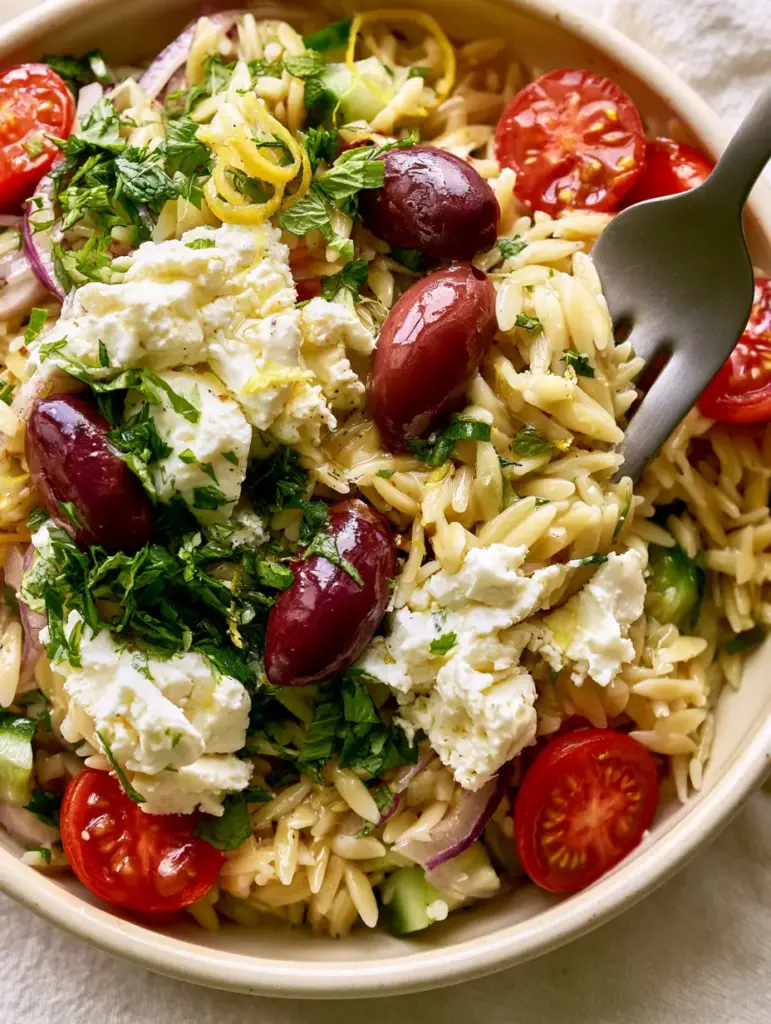
Place the cooled orzo in a large ceramic bowl. Pour half of the dressing over the pasta and toss with a matte silver fork. Look for the “non-clumping” texture where each grain is individually coated and shimmering.
Add the tomatoes, cucumbers, onions, olives, and chopped herbs. Toss again gently. Finally, add the jagged feta crumbles and lemon zest curls on top to prevent them from breaking down too much.
Pro Secrets for Al Dente Excellence
- Salt the Water Like the Sea: Since orzo is small, it absorbs flavor quickly. Seasoning the boiling water is your only chance to flavor the pasta from the inside out.
- The Cold Rinse Defense: Unlike hot pasta dishes, a cold pasta salad requires a quick rinse. This removes the surface starch that causes the grains to stick together as they cool.
- Dress Twice: Pasta absorbs liquid as it sits. If you are making this ahead of time, save 1/4 of the dressing to toss in just before serving to restore that shimmering look.
- Feta Choice: Always buy feta in a block. The texture of hand-crumbled feta is vastly superior for catching the small herbs and lemon zest.
Pairing Suggestions & Mediterranean Feasts
This Greek Orzo Pasta Salad is a versatile powerhouse. It pairs beautifully with grilled chicken or lamb skewers, but it also stands alone as a sophisticated lunch.
If you enjoy this texture-heavy approach to salads, you might also love a grilled corn orzo salad for a smoky twist. For those who prefer a more traditional pasta shape, my tortellini salad offers a similar Mediterranean flavor profile with a heartier bite.
For a full spread, consider serving this alongside a lemon-herb greek potato salad to offer guests a variety of starch-based sides. Explore my full collection of refreshing salad recipes for more seasonal inspiration.
Safe Storage & Meal Prep Mastery
This salad is an excellent candidate for meal prep because the flavors actually improve as the ingredients marinate. Store it in an airtight glass container in the refrigerator for up to 4 days.
Do not freeze this salad. The cellular structure of the cucumbers and tomatoes will collapse upon thawing, resulting in a mushy texture. For the best visual appeal, add the fresh mint and parsley just before serving to keep them from bruising.
Frequently Asked Questions
Yes, though orzo is traditional for its rice-like texture. You can substitute with acini de pepe or even ditalini. Just ensure you adjust the cooking time to maintain an al dente bite.
The secret is to rinse the cooked orzo under cold water immediately after draining. This removes the surface starch that acts like glue. Tossing it with a bit of the lemon vinaigrette while still slightly damp also ensures the grains stay separate and shimmering.
It will stay fresh for up to 4 days in an airtight container. Note that the pasta may absorb some dressing, so you might want to add a squeeze of lemon or a drizzle of olive oil before serving on day three or four.
This recipe is designed to be served cold or at room temperature. Serving it cold highlights the crispness of the Persian cucumbers and the refreshing notes of the mint.
Block feta is stored in brine, which keeps it creamy and tangy. Hand-crumbling it creates jagged, irregular edges that hold onto the lemon dressing much better than the dry, uniform bits of pre-crumbled feta.
The Ultimate Greek Orzo Pasta Salad Recipe
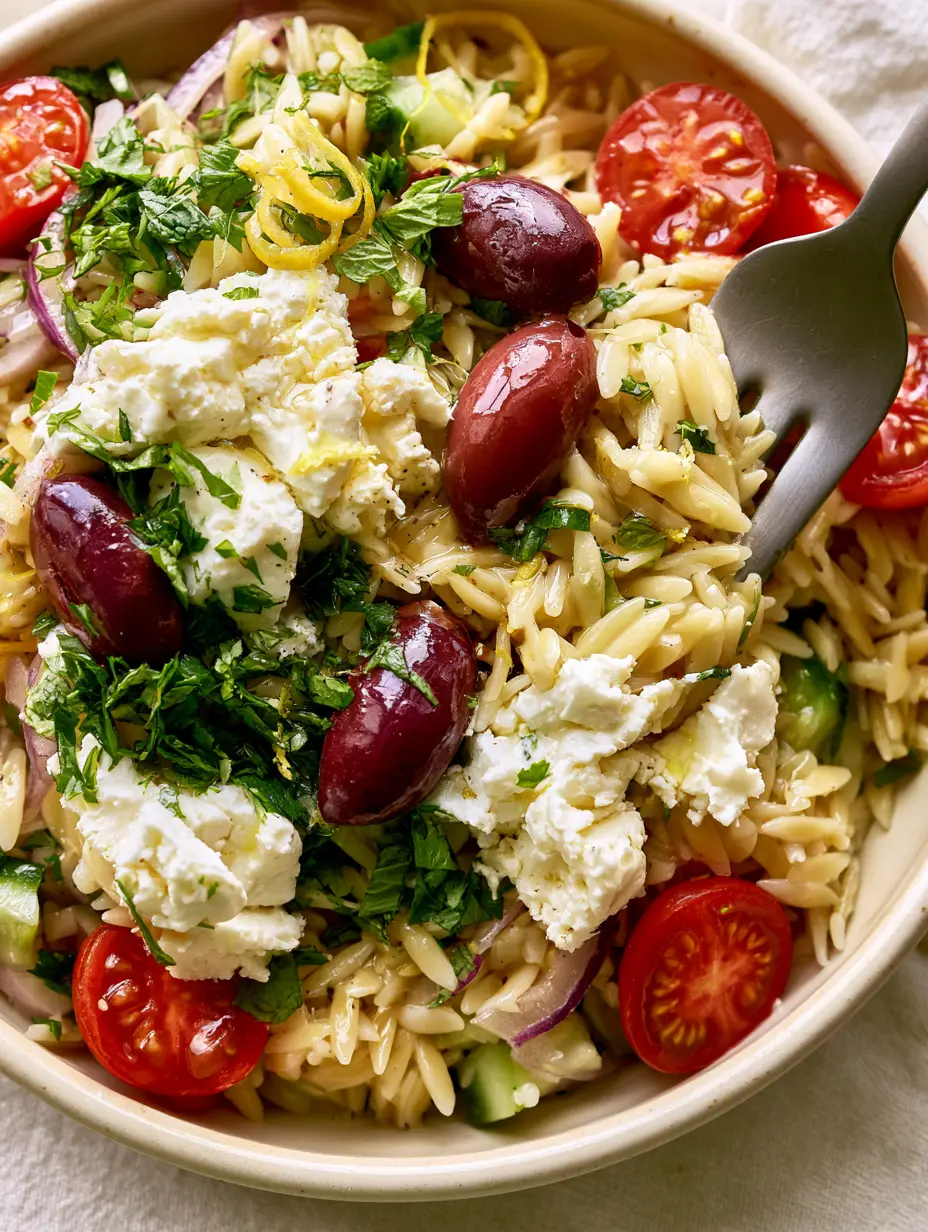
Greek Orzo Pasta Salad with Zesty Lemon Vinaigrette and Feta
Ingredients
Equipment
Method
- Cook orzo in salted boiling water for 1 minute less than package directions until al dente.
- Drain and rinse with cold water to stop cooking and ensure a non-clumping texture.
- Combine olive oil, lemon juice, honey, and garlic in a jar; shake until shimmering and opaque.
- In a large bowl, toss orzo with dressing, then fold in tomatoes, cucumbers, onions, olives, and herbs.
- Top with jagged feta crumbles and lemon zest curls before serving with a matte silver fork.
Notes
Dress the salad twice if making ahead; pasta absorbs dressing over time.
Join the Stacy Bites Community
The Greek Orzo Pasta Salad is a testament to how simple ingredients, when treated with professional technique, can create a world-class meal. The contrast of the jagged feta against the shimmering pasta is as pleasing to the eye as it is to the palate.
If you made this recipe, I would love to hear about it! Leave a comment below and tell me how your “art of the toss” went. Don’t forget to follow me on Pinterest for more visually stunning recipe inspiration. Happy cooking!