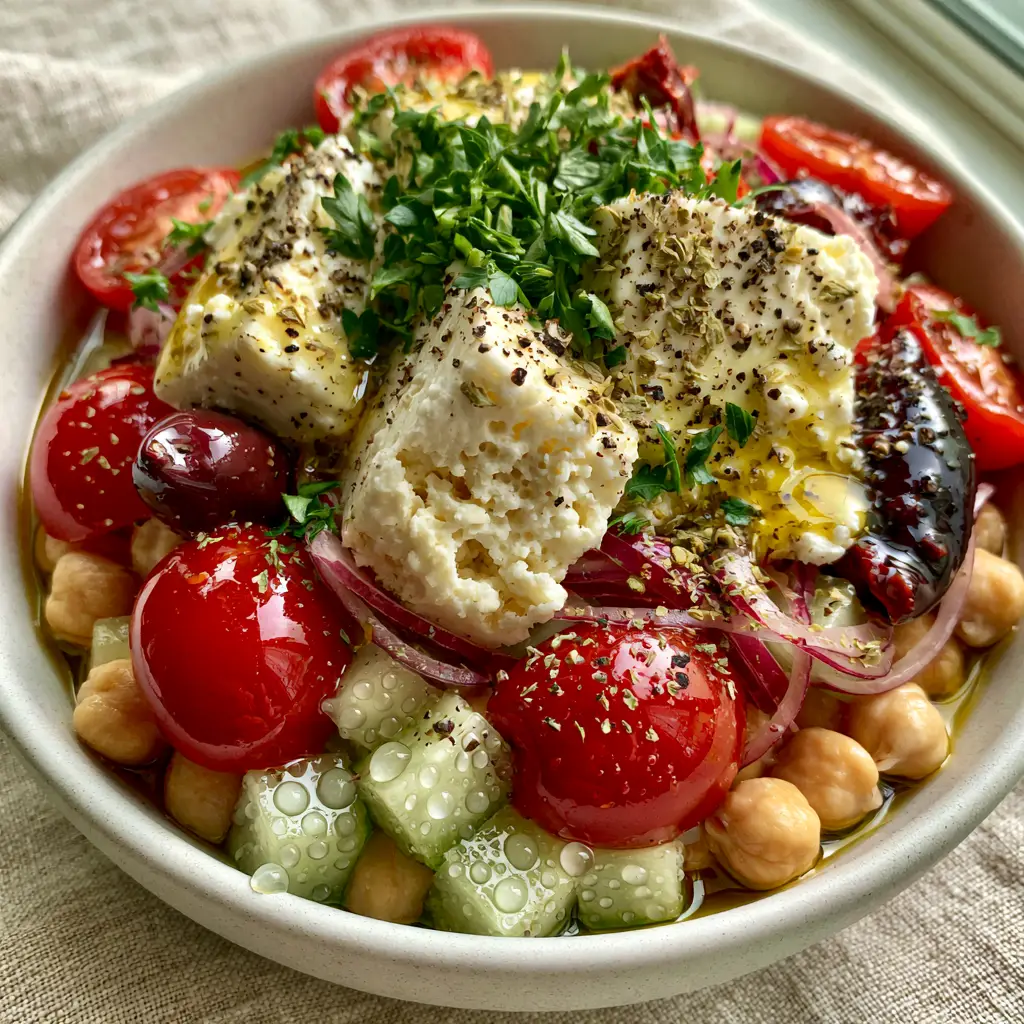
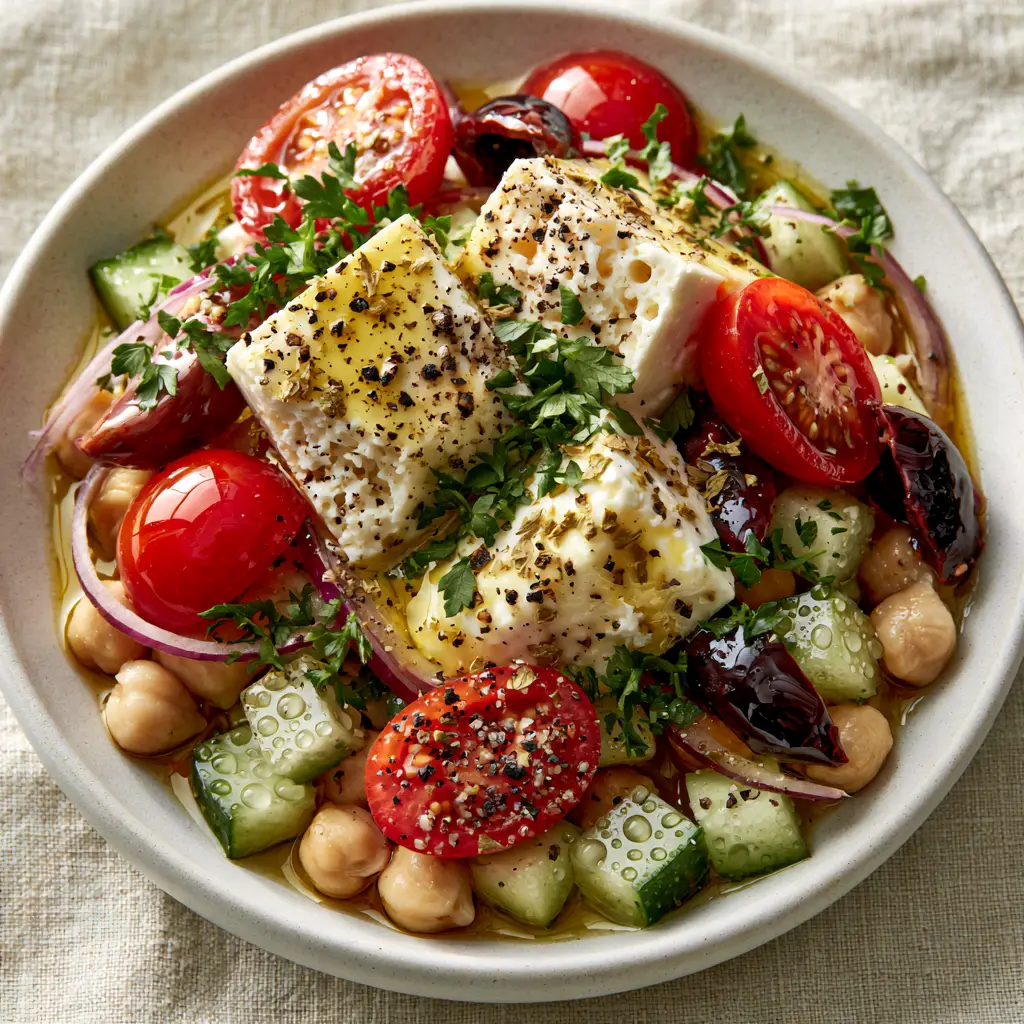
There is a specific visual magic that happens when high-quality, sun-drenched ingredients meet in a matte white ceramic bowl. This Mediterranean Feta Salad isn’t just a side dish; it is a masterclass in textural contrast, featuring firm, matte chickpeas and vibrant Persian cucumbers covered in delicate water droplets.
Imagine the bite of a glossy, halved cherry tomato followed by the creamy, porous texture of a hand-broken block of feta. Every element is designed to catch the light, from the dark, oily Kalamata olives to the glistening, translucent gold lemon-herb vinaigrette that ties the bowl together.
Whether you are looking for a protein-packed lunch or a stunning centerpiece for a summer dinner, this recipe delivers on the promise of the Mediterranean coast. It is bright, acidic, salty, and incredibly satisfying for even the most discerning home cook.
The Pillars of a Perfect Mediterranean Feta Salad Bowl
To achieve the high-resolution, realistic textures seen in the best culinary photography, we must focus on the integrity of each component. This salad relies on the “un-chopped” philosophy, where ingredients are kept in large enough pieces to maintain their structural identity.
- Structural Integrity: Using firm, drained chickpeas provides a matte, earthy base that contrasts against the high-gloss vegetables.
- Water-Droplet Freshness: We use Persian cucumbers for their thin skins and extreme crunch, ensuring they stay crisp even after being dressed.
- The Feta Factor: Unlike standard crumbled feta, we use large, chunky blocks to showcase a porous, creamy texture that absorbs the dried oregano and cracked black pepper.
- Golden Emulsification: The vinaigrette is a translucent gold, designed to make the salad glisten without becoming heavy or greasy.
The Anatomy of Glistening Ingredients
Selecting the right ingredients is the difference between a soggy bowl and a vibrant Mediterranean Feta Salad. Every item in this list has been forensically chosen to match our visual blueprint for a high-end, eye-level close-up result.
Firm Canned Chickpeas: 1 can (15 oz / 425g) chickpeas. These provide the protein-rich “matte” foundation of the dish; ensure they are rinsed and dried thoroughly to prevent a cloudy dressing.
Crisp Persian Cucumbers: 3 medium (300g) cucumbers. These are preferred over English cucumbers because their low seed count prevents the salad from becoming watery, keeping that “water-droplet-covered” look intact.
Glossy Cherry Tomatoes: 1.5 cups (225g) cherry tomatoes. Halving them exposes their juicy interior while the exterior remains bright red and reflective under natural side-lighting.
Hand-Broken Feta Cheese: 7 oz (200g) high-quality block feta. Avoid pre-crumbled varieties; breaking the block by hand creates those large, chunky blocks with a porous texture that looks stunning in a ceramic bowl.
Pitted Kalamata Olives: 1/2 cup (75g) whole olives. These should be dark and oily, providing a deep purple-black contrast against the creamy white cheese and green parsley.
Red Onion Slivers: 1/4 small (40g) red onion. Slicing these into paper-thin half-moons ensures they provide a sharp bite without overpowering the delicate herbs.
The “Translucent Gold” Vinaigrette: 1/4 cup (60ml) Extra Virgin Olive Oil, 2 tbsp (30ml) fresh lemon juice, 1 tsp (5g) dried oregano, and 1/2 tsp (2g) cracked black pepper. This creates the glistening finish that coats each vegetable.
Fresh Flat-Leaf Parsley: 1/4 cup (10g) chopped. A generous sprinkle adds the final layer of vibrant green, signifying freshness and herb-forward flavor profiles.
Essential Tools for Culinary Precision
To recreate the eye-level close-up aesthetic, you will need a few specific tools that help manage texture and presentation. A matte white ceramic bowl is the best vessel for making the colors of the Mediterranean Feta Salad pop against a neutral beige linen background.
A very sharp chef’s knife is non-negotiable for achieving those thin slivers of red onion and the clean halves of the cherry tomatoes. For the dressing, a small glass jar or a stainless steel whisk will help you achieve a perfectly emulsified, translucent gold liquid.
Finally, a colander is essential for draining the chickpeas. They must be bone-dry before entering the bowl to ensure the vinaigrette clings to their matte surface rather than sliding off into a pool at the bottom.
Step-by-Step Instructions for the Perfect Assembly
Preparing the Matte Chickpea Base
Begin by draining your chickpeas into a colander and rinsing them under cold water until the foam disappears. Spread them out on a clean kitchen towel and pat them dry; this is the secret to ensuring they maintain their firm, matte appearance in the final Mediterranean Feta Salad.
Once dry, place them at the bottom of your matte white ceramic bowl. This creates a sturdy foundation for the heavier, glossier vegetables you will layer on top later.
Mastering the Vegetable Texture
Dice your Persian cucumbers into 1/2-inch (1.25cm) pieces, keeping them uniform for a professional look. If you want that “water-droplet” effect, keep the cucumbers chilled until the very moment of assembly.
Slice the cherry tomatoes longitudinally. This exposes the seeds and juice, which will later mingle with the lemon vinaigrette to create a natural, glistening sauce that coats the other ingredients.
Layer the cucumbers and tomatoes over the chickpeas, followed by the thin slivers of red onion and the whole, oily Kalamata olives. Do not toss the salad yet; we want to preserve the distinct layers for the best visual impact.
The Chunky Feta Technique
Take your block of feta out of its brine and pat it dry. Instead of using a knife, use your fingers to break the block into large, irregular chunks about 1 inch (2.5cm) in size.
This “hand-broken” method is critical because it preserves the porous texture of the cheese, allowing the cracked black pepper and oregano to settle into the crevices. Place these chunks as the centerpiece of your salad bowl.
Whisking the Translucent Gold Vinaigrette
In a small bowl, combine the extra virgin olive oil and fresh lemon juice. Whisk vigorously until the oil and acid are fully emulsified into a translucent gold liquid that looks like liquid sunshine.
Stir in the dried oregano and a generous amount of cracked black pepper. Drizzle this mixture slowly over the salad, ensuring every block of feta and every sliver of onion is lightly glistening under the natural side-lighting of your kitchen.
The Final Flourish
Top the dish with a generous amount of freshly chopped flat-leaf parsley. The green of the parsley against the white of the feta and the red of the tomatoes creates a high-contrast palette that is quintessential to a Mediterranean Feta Salad.
Serve immediately while the cucumbers are at their crispest and the dressing is perfectly emulsified. If you enjoy this flavor profile, you might also love our classic cucumber salad recipe or a punchy sumac onion salad for your next mezze platter.
Pro Tips for a High-Resolution Salad
- The Ice Bath Trick: If your red onions are too pungent, soak the thin slivers in an ice bath for 10 minutes. This keeps them crisp but removes the “burn,” similar to how we prep onions for a vibrant spaghetti salad.
- Vinaigrette Timing: Only dress the salad right before serving. The acid in the lemon juice will eventually soften the Persian cucumbers and dull the bright green of the parsley.
- Quality of Oil: Use the best Extra Virgin Olive Oil you can find. Since this is a raw salad, the peppery notes of a high-end oil will define the flavor of the Mediterranean Feta Salad.
- Feta Temperature: Serve the feta at room temperature. Cold feta can be hard and waxy, but room-temperature feta is creamy and highlights that porous, open texture we are looking for.
Make-Ahead, Storage, and Freshness Guidelines
While this salad is best enjoyed fresh to maintain the “crisp” and “glossy” textures, you can prep the components in advance. Store the chopped cucumbers, halved tomatoes, and sliced onions in separate airtight containers in the refrigerator for up to 24 hours.
Keep the hand-broken feta in its brine until the very last moment to prevent it from drying out. The vinaigrette can be made 3 days in advance and kept at room temperature; just give it a vigorous shake before drizzling to restore that translucent gold shimmer.
Leftovers will stay safe to eat for up to 2 days in the fridge, though the vegetables will lose their snap. If you have leftover chickpeas and feta, they make a great addition to a refreshing summer pasta salad the next day.
What to Serve With This Mediterranean Masterpiece
This Mediterranean Feta Salad is the ultimate versatile side. Pair it with grilled lamb chops, lemon-herb roasted chicken, or a side of warm pita bread and hummus. It brings a necessary brightness to heavier meals, acting as a palate cleanser between bites.
If you are hosting a summer cookout, this salad sits beautifully alongside a fresh corn salad or even a classic caprese pasta salad. The combination of fresh vegetables and salty cheese is a crowd-pleaser that fits any outdoor menu.
For a lighter lunch, serve it solo with a glass of crisp white wine. The protein from the chickpeas makes it surprisingly filling, while the lemon vinaigrette keeps the entire experience feeling light and airy.
Mediterranean Salad FAQ
This recipe uses canned chickpeas that are thoroughly rinsed and dried. They are firm and matte, providing a great protein base without the need for additional cooking, keeping the salad fresh and cool.
Absolutely! While the chickpeas provide plenty of plant-based protein, this Mediterranean Feta Salad pairs beautifully with sliced grilled chicken breast or even chilled shrimp.
While you can, it is not recommended for the best visual and textural results. Pre-crumbled feta is often coated in anti-caking agents, whereas hand-breaking a block of feta ensures a creamy, porous texture that absorbs the lemon vinaigrette perfectly.
Using Persian cucumbers is the first step, as they have fewer seeds. Additionally, only add the lemon vinaigrette right before serving, as the salt and acid will draw moisture out of the vegetables over time.
The secret is emulsification. By whisking high-quality extra virgin olive oil with fresh lemon juice until it becomes a translucent gold color, you ensure the dressing coats the ingredients evenly rather than separating.
The Ultimate Mediterranean Feta Salad Recipe
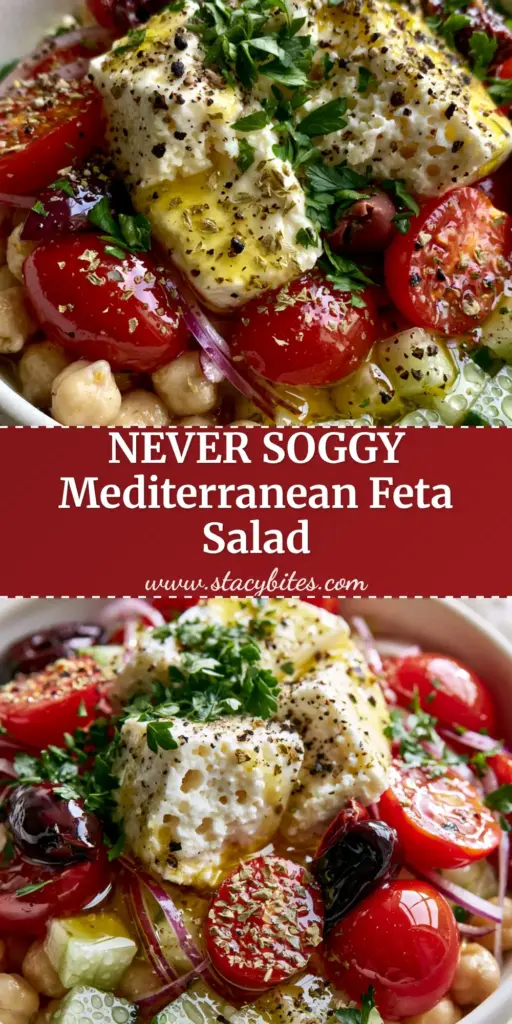
Mediterranean Feta Salad with Crisp Chickpeas and Lemon Vinaigrette
Ingredients
Equipment
Method
- Rinse and drain chickpeas thoroughly. Pat dry with a kitchen towel to ensure they remain firm and matte.
- Place chickpeas in the ceramic bowl. Layer with diced cucumbers, halved cherry tomatoes, red onion slivers, and whole olives.
- Break feta into large chunks by hand and place on top. Whisk oil, lemon juice, oregano, and pepper until a translucent gold vinaigrette forms. Drizzle over the salad.
Notes
Hand-breaking the feta is essential for a porous texture that catches the dressing.
Share Your Culinary Creation!
Nothing makes us happier than seeing this Mediterranean Feta Salad in your own kitchen! If you make this recipe, please leave a comment below and tell us how your hand-broken feta turned out. Did you capture that glistening, translucent gold glow?
Don’t forget to follow us on Pinterest for more vibrant recipe inspiration and step-by-step culinary guides. Save this recipe to your “Healthy Lunches” or “Summer Salads” board so you always have a hit ready for your next gathering!