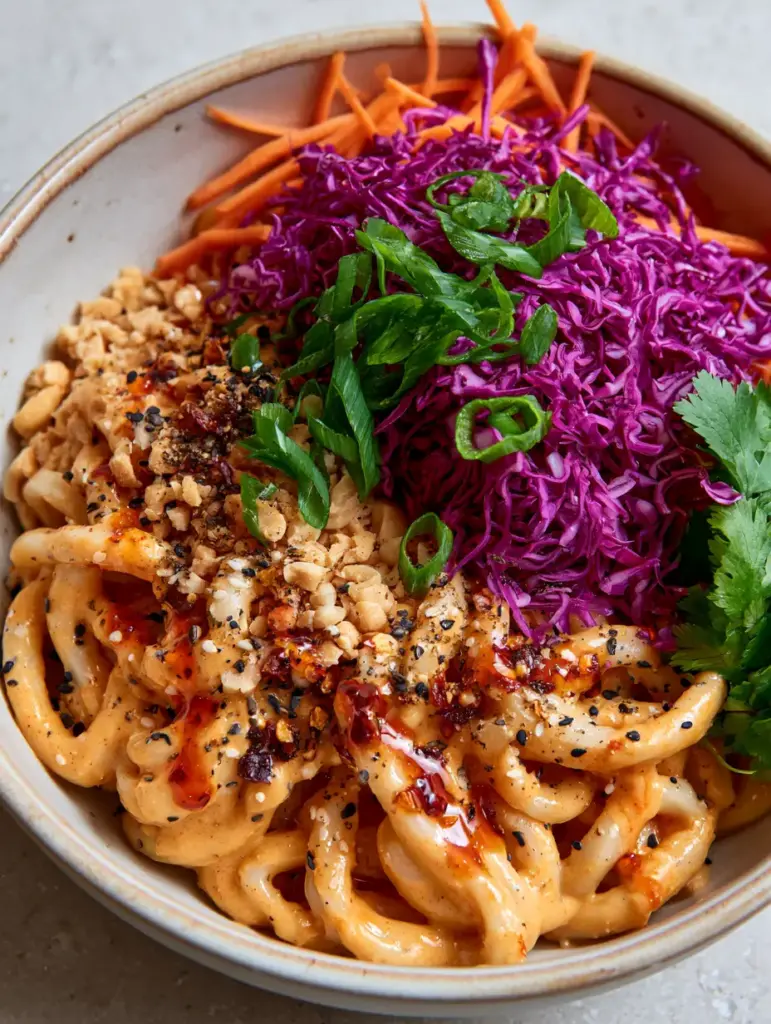
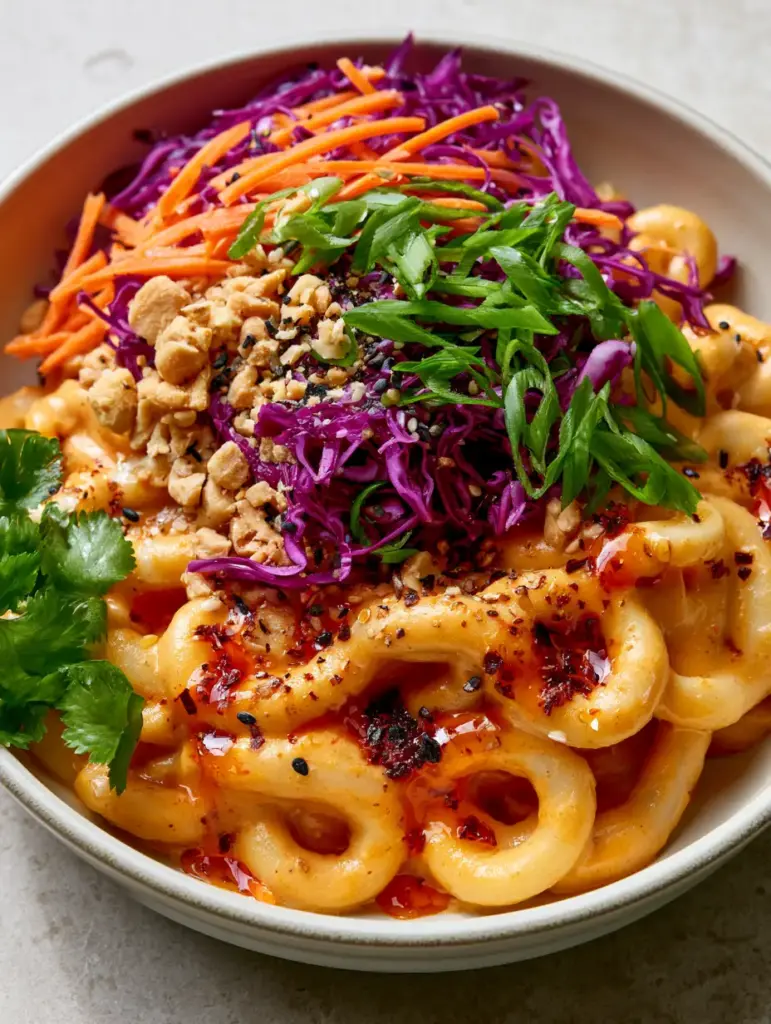
When it comes to the perfect spicy Asian noodle salad, the secret lies in the interplay between textures and the deep, complex heat of the dressing. Imagine thick, glossy udon noodles submerged in a rich, orange-tinted peanut sauce that clings to every curve of the pasta. This dish isn’t just a meal; it’s a sensory experience designed to hit every taste bud—sweet, salty, acidic, and fiery.
The visual contrast is what truly sets this recipe apart. Vibrant ribbons of purple cabbage and matchstick carrots provide a refreshing crunch that cuts through the creaminess of the sauce. Topped with a dramatic drizzle of red chili oil and a scatter of charred pepper flakes, this salad is as beautiful as it is delicious.
Whether you are looking for a quick meal prep option or a show-stopping side for your next gathering, this dish delivers. It is a modern take on classic flavors, refined for the home cook who appreciates the nuances of a well-balanced sauce and high-quality ingredients.
Why This Is the Ultimate Spicy Asian Noodle Salad Experience
- Unrivaled Texture: The chewy, bouncy nature of fresh udon noodles provides a satisfying “mouthfeel” that thinner noodles simply cannot match.
- High-Contrast Aesthetics: Bright purple cabbage and vivid orange carrots create a professional, “macro-shot” worthy presentation that looks incredible in the bowl.
- Complex Heat: By using a red chili oil drizzle with charred pepper flakes, we achieve a smoky, layered spice rather than a one-dimensional burn.
- Creamy Emulsification: Our specific whisking technique ensures the peanut sauce is glossy and thick, never grainy or broken.
The Anatomy of a Perfect Noodle Bowl: Ingredients and Substitutions
Fresh Udon Noodles (1 lb / 450g): These thick, wheat-based noodles are the heart of the dish. Their porous surface is essential for absorbing the heavy peanut sauce while maintaining a distinct chewiness.
Creamy Natural Peanut Butter (1/2 cup / 125g): We use natural, unsweetened peanut butter to control the sugar content. This provides the “orange-tinted” base that characterizes the rich sauce seen in the visual blueprint.
Red Chili Oil with Charred Flakes (3 tbsp / 45ml): This is the engine of the spicy Asian noodle salad. The charred flakes add a toasted dimension and a visual pop of deep red against the creamy sauce.
Purple Cabbage (2 cups / 150g): Finely shredded cabbage is non-negotiable for color. It provides a bitter-sweet crunch that keeps the palate refreshed between bites of heavy noodles.
Julienned Carrots (1 cup / 100g): Matchstick-cut carrots offer a subtle sweetness. If you don’t have a mandoline, a sharp knife and patience will yield the best visual result.
Soy Sauce or Tamari (3 tbsp / 45ml): This provides the foundational umami and salt. For a gluten-free version, tamari works perfectly without sacrificing flavor depth.
Rice Vinegar (2 tbsp / 30ml): Acidity is required to “lift” the heavy fats in the peanut butter. It transforms the sauce from a heavy paste into a bright, vibrant dressing.
Toasted Sesame Oil (1 tbsp / 15ml): Just a small amount provides that classic nutty aroma that defines many sesame noodle salad variations.
Garnish Trio (Peanuts, Sesame Seeds, Scallions): Crushed roasted peanuts add a blunt crunch, black and white sesame seeds add visual “dusting,” and sliced scallions bring a sharp, green bite.
Fresh Cilantro Sprigs: A small cluster of bright green cilantro leaves on the side of the bowl adds a floral finish and a final pop of high-contrast color.
Essential Tools for Professional Results
To achieve the precise textures described, you will need a large pot for boiling the udon. Ensure you have enough water volume to prevent the noodles from sticking together during the starch release.
A high-quality vegetable peeler or a mandoline slicer is vital for the julienned carrots. Uniformity in the vegetable cuts ensures that every forkful has the same ratio of crunch to chew.
Finally, a stainless steel whisk is required for the peanut sauce. Emulsifying the fats and liquids by hand creates that signature glossy sheen that looks so appetizing under natural side-lighting.
Mastering the Spicy Asian Noodle Salad: Step-by-Step Instructions
1. Preparing the Udon Foundation
Bring a large pot of salted water to a rolling boil. Add 1 lb (450g) of udon noodles, gently nudging them with tongs to separate the strands.
Cook according to package directions, usually 3-5 minutes for fresh or vacuum-packed noodles. The “Visual Cue” to look for is a translucent edge with an opaque, chewy center.
Immediately drain and rinse the noodles under cold running water. This stops the cooking process and removes excess surface starch, ensuring the noodles remain glossy and individual rather than a sticky clump.
2. Crafting the Glossy Orange Peanut Dressing
In a medium mixing bowl, combine 1/2 cup (125g) of creamy peanut butter with 3 tbsp (45ml) soy sauce, 2 tbsp (30ml) rice vinegar, and 1 tbsp (15g) honey or maple syrup.
Whisk vigorously while drizzling in 2-3 tbsp (30-45ml) of warm water. Watch as the sauce transforms from a broken, curdled look into a smooth, thick, orange-tinted cream.
Taste the sauce at this stage. It should be punchy and salt-forward, as it will be diluted slightly once tossed with the neutral udon noodles and fresh vegetables.
3. The Precision Prep of the Aromatics and Greens
Finely shred the purple cabbage until you have a vibrant heap of purple ribbons. The thinner the shred, the better they will integrate with the thick noodles.
Julienne the carrots into thin matchsticks, approximately 2 inches (5cm) in length. Slice the scallions on a sharp bias to create elegant green rings.
Roughly chop the roasted peanuts. You want a mix of fine dust and larger chunks to provide varied texture in the final spicy Asian noodle salad.
4. Assembly and Professional Plating
Place the cold udon noodles in a large mixing bowl and pour over 3/4 of the peanut sauce. Toss thoroughly using tongs until every strand is coated and glossy.
Transfer the noodles to a ceramic bowl. Top with a high-contrast mound of shredded cabbage in the center, followed by the carrot matchsticks and scallions.
Finish with a dusting of black and white sesame seeds and the crushed peanuts. Drizzle the red chili oil over the top, making sure to include those tiny charred pepper flakes for visual texture.
Tuck a small cluster of fresh cilantro sprigs into the side of the bowl. This provides the final element of the “Midjourney” visual blueprint: a pop of bright green against the warm orange sauce.
Expert Tips for Success
- Temperature Control: If you prefer a warm salad, skip the cold rinse but be prepared for a thicker sauce. Cold rinsing is best for that “glossy” photo finish.
- Sauce Consistency: Peanut butter brands vary in oil content. If your sauce is too thick to drizzle, add warm water one teaspoon at a time until it reaches a heavy cream consistency.
- Make it Ahead: This spicy Asian noodle salad actually tastes better after 30 minutes, as the noodles absorb the flavors. However, add the peanuts and cilantro just before serving to maintain crunch.
- Spice Level: If you aren’t a fan of high heat, use a mild chili crisp or simply a dash of paprika in the oil for color without the burn.
Safe Storage and Refreshing Leftovers
Store any leftovers in an airtight container in the refrigerator for up to 3 days. Because udon is wheat-based, it may firm up when cold.
To refresh the salad, add a teaspoon of warm water or a splash of rice vinegar and toss gently. This will loosen the peanut sauce and restore its glossy appearance.
Do not freeze this recipe. The fresh cabbage and carrots will lose their structural integrity and become watery upon thawing, ruining the carefully crafted texture.
What to Serve With This Vibrant Salad
This dish is incredibly filling on its own, but it also pairs beautifully with other vibrant salad recipes for a tapas-style lunch. If you want to lean into the noodle theme, consider a side of vegetable rice noodle salad for a lighter, gluten-free contrast.
For those who love a fusion spread, a creamy pasta salad can provide a more Western flavor profile to balance the ginger and soy notes. Alternatively, the smoky sweetness of a grilled corn orzo salad complements the charred chili flakes in the udon dressing perfectly.
Frequently Asked Questions
Yes! Simply swap the wheat udon for thick rice noodles and ensure you use tamari instead of traditional soy sauce.
Absolutely. Almond butter or even tahini works well, though it will slightly alter the flavor profile and color of the sauce.
Use a mandoline slicer with a julienne blade for the most consistent results, or peel the carrot into ribbons and then slice those ribbons into thin strips.
While it can be served warm, it is traditionally enjoyed cold or at room temperature to emphasize the refreshing crunch of the raw vegetables.
The key is a thorough cold-water rinse immediately after boiling. This removes surface starch and keeps the noodles glossy and separate.
The Final Recipe: Spicy Asian Noodle Salad
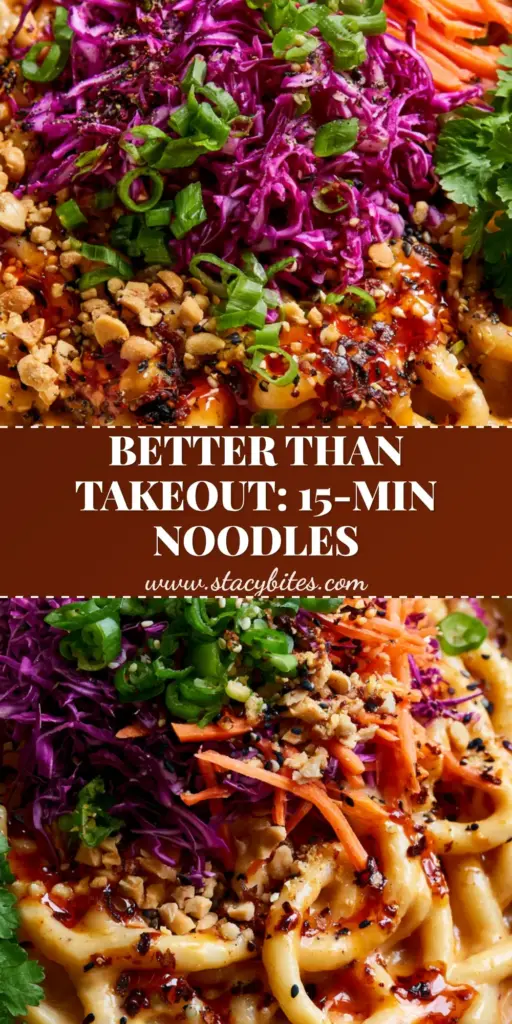
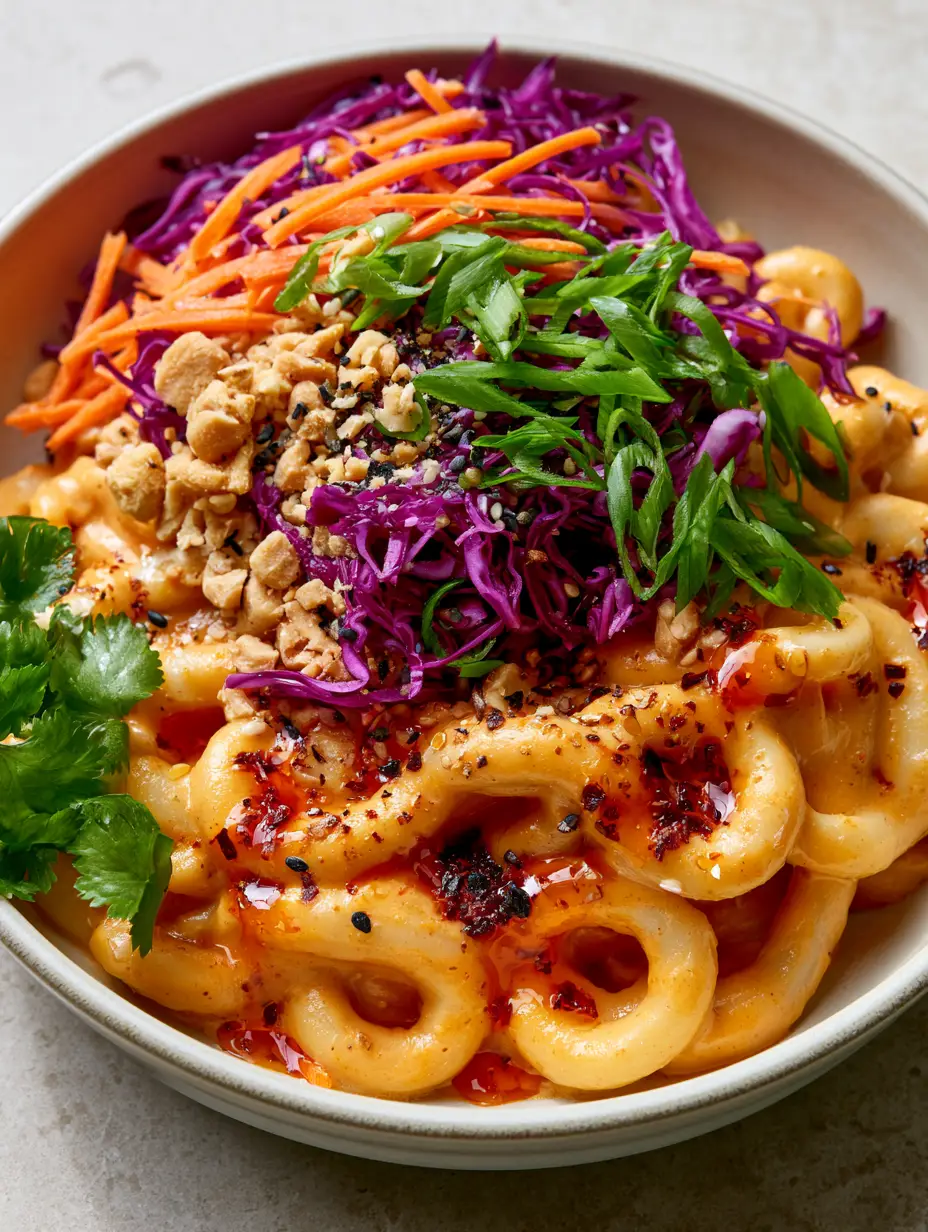
Spicy Asian Noodle Salad with Creamy Peanut Sauce
Ingredients
Equipment
Method
- Boil udon noodles in salted water for 3-5 minutes until tender but chewy. Drain and rinse under cold water to keep them glossy.
- Whisk peanut butter, soy sauce, rice vinegar, honey, and sesame oil with 2 tablespoons of warm water until a smooth, orange-tinted cream forms.
- Toss noodles with sauce. Top with shredded cabbage, julienned carrots, scallions, peanuts, sesame seeds, and a heavy drizzle of chili oil. Add cilantro on the side.
Notes
Adjust the chili oil drizzle to your personal spice preference.
Closing & Call to Action
This spicy Asian noodle salad is a testament to how simple ingredients can be transformed into something extraordinary with the right technique. The combination of chewy udon and creamy, fiery peanut sauce is a staple in our kitchen, and we know it will become one in yours too.
If you enjoyed this recipe, please leave a comment below and let us know how your version turned out! Don’t forget to share your photos and follow us on Pinterest for more culinary inspiration. Happy cooking!